
If you have a baby at home, you’ve probably heard of RSV. But how much do you really know about it?
Respiratory Syncytial Virus (RSV) is a common virus that affects the airways and lungs. Globally, around 2 in 3 babies will catch RSV before their first birthday.1
Most cases are mild,2,3 but RSV can sometimes turn serious.
Here are five things every mum and dad should know.
1. RSV Is Very Common in Babies

RSV spreads easily through coughs, sneezes, close contact and contaminated surfaces. Anyone can catch it, but babies are hit harder because their airways are smaller and their immune systems are still developing.4-8
Here in Malaysia, RSV is the most common respiratory virus found in babies aged 6 months and below, behind 81% of their viral respiratory tract infections.9
About 2 in 3 children catch it before turning one,10 and it causes 7 out of 10 viral lung infections in children under 5.11
RSV is also a leading cause of baby hospital stays.12-14
Nearly 9 out of 10 children under 2 who get RSV need hospital care,9 and those admitted stay about 5 and a half days on average.15
2. Severe RSV Can Happen to Healthy Babies Too
It’s easy to think only premature babies or babies with health conditions are at risk. But all babies are at risk, including healthy ones.13,16-18
In Malaysia, more than 80% of RSV hospitalisations were amongst previously healthy infants.15
3. RSV Can Lead to Bronchiolitis or Pneumonia
At first, RSV often looks like a common cold. Look out for:2,3,20
- Runny or blocked nose
- Sneezing
- Cough
- Low-grade fever
- Irritability
- Poor feeding
In some babies, things can get worse quickly, with fast breathing, shortness of breath and spasms in the airways (bronchospasms).
This can lead to bronchiolitis or pneumonia.21
RSV is the predominant cause of bronchiolitis and pneumonia in children under 1, and is responsible for up to 80% of bronchiolitis cases in babies.4
With bronchiolitis, the tiny airways in the lungs become inflamed and swollen, so breathing gets harder.3,4
Watch for these warning signs:2,3,20,22
- Wheezing
- Fast or difficult breathing
- Tummy sucking in, or ribs showing more than usual when breathing
- Blue lips or fingertips
- Trouble feeding or drinking
Severe cases may need hospital care.2
If your baby is struggling to breathe, isn’t drinking enough or seems to be getting worse, see a doctor straight away.
4. Simple Steps Can Help Reduce the Spread of RSV
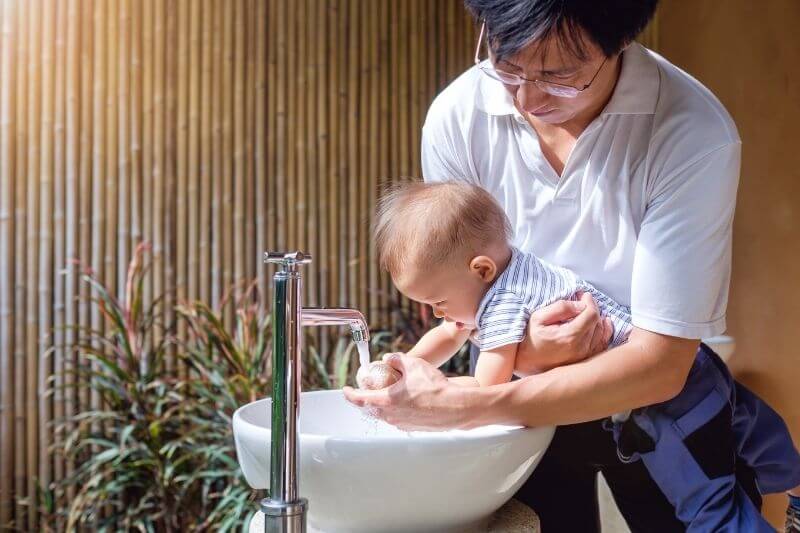
There is currently no specific treatment for RSV, so prevention really matters.
A few simple habits can help lower the chance of passing the virus to your baby:
- Wash your hands often, for at least 20 seconds, especially before you pick up your baby.
- Wipe down toys and frequently touched surfaces.
- Keep unwashed hands away from your baby’s face.
- Where you can, keep your baby away from people who are unwell.
- If you’re unwell yourself, practise good hand and respiratory hygiene and take extra care around your baby.
RSV happens all year-round in Malaysia, putting all infants at risk throughout the year.
In Peninsular Malaysia, infection peaks are more pronounced either in the third quarter or at the end of the year, while East Malaysia has seen an earlier peak from March to August.15
So these habits aren’t just for one season. Make them part of your routine, especially when anyone at home is coughing, sneezing or feeling under the weather.
5. There Are RSV Immunisation Options Too

Beyond good hygiene, there are immunisation options you can discuss with your healthcare professional.
Monoclonal antibodies are given to your baby from birth to directly protect them against RSV.
RSV vaccination during pregnancy passes protective antibodies from mum to baby.
In Malaysia, experts recommend that babies can still receive monoclonal antibodies after 6 months for continued protection, even if mum had the RSV vaccine during pregnancy.15
Not sure what’s right for your little one?
Talk to your paediatrician or other healthcare professionals about RSV prevention options for your baby. Visit TogetherAgainstRSV.my to learn more.
Save This RSV Awareness Checklist
Know the warning signs
- Fast or difficult breathing, or wheezing
- Tummy sucking in, or ribs showing more than usual
- Blue lips or fingertips
- Trouble feeding or drinking
- Symptoms that seem to be getting worse
Protect your baby at home
- Wash your hands for at least 20 seconds before picking up your baby
- Wipe down toys and frequently touched surfaces
- Keep unwashed hands away from your baby’s face
- Keep your baby away from people who are unwell
- Take extra care around your baby if you’re unwell yourself
Talk to your paediatrician about
- Immunisation with monoclonal antibodies for your baby
- Maternal vaccination during pregnancy
- Experts recommend giving monoclonal antibodies after your baby turns 6 months, even if you had the vaccine while pregnant15
This is a public awareness initiative by Sanofi Malaysia.
MAT-MY-2600328-1.0-07/2026
References:
- Walsh E. Clin Chest Med 2017; 38(1): 29–36.
- Piedimonte G, Perez MK. Pediatr Rev 2014; 35(12): 519–530.
- Meissner HC. N Engl J Med 2016; 374(1): 62–72.
- Pickles RJ, De Vincenzo JP. J Pathol 2015; 235(2): 266–276.
- Hussain M et al. Biochim Biophys Acta Mol Basis Dis 2017; 1863(12): 3226–3242.
- Lambert L et al. Front Immunol 2014; 5: 466.
- Di Cicco M et al. Pediatr Pulmonol 2021; 56(1): 240–251.
- Simon AK et al. Proc Royal Soc 2015; 282: 20143085.
- Khor CS, Sam IC, Hooi PS, Quek KF, Chan YF. Epidemiology and seasonality of respiratory viral infections in hospitalized children in Kuala Lumpur, Malaysia: a retrospective study of 27 years. BMC Pediatr. 2012;12:32. doi:10.1186/1471-2431-12-32
- Low YL, Wong SY, Lee EKH, Muhammed MH. Prevalence of respiratory viruses among paediatric patients in acute respiratory illnesses in Malaysia. PLoS ONE 2022;17(8):e0265288. https://doi.org/10.1371/journal.pone.0265288
- Ng KF et al. J Paediatr Child Health 2017;53(4):399–407.
- Leader S, Kohlhase K. Pediatr Infect Dis J 2002; 21(7): 629–632.
- Demont C et al. BMC Infect Dis 2021; 21(1): 730.
- Suh M et al. J Infect Dis 2022; 226(Suppl 2): S154–S163.
- Cheah FC et al. Recommendations on RSV immunization strategies for infants and young children in countries with year-round RSV activity.
- Hall CB et al. Pediatrics 2013; 132(2): e341–e348.
- Arriola C et al. J Pediatric Infect Dis Soc 2020; 9(5): 587–595.
- Bianchini S et al. Microorganisms 2020; 8(12): 2048.
- Ng DC et al. Clin Respir J 2024; 18(3): e13747.
- Mayo Clinic. Respiratory syncytial virus. https://www.mayoclinic.org/diseases-conditions/respiratory-syncytial-virus/symptoms-causes/syc-20353098
- Centers for Disease Control. RSV in Infants and Young Children. https://www.cdc.gov/rsv/infants-young-children/index.html
- Vandendijck Y et al. Influenza Other Respir Viruses 2022; 16: 1091–1100.
Disclaimer: The information provided in this article is for informational purposes only and should not be considered as medical advice from Motherhood. For any health-related concerns, it is advisable to consult with a qualified healthcare professional or medical practitioner.
For more insightful stories and fun recipes, stay tuned to Motherhood Story!