
If you’re currently pumping breast milk and wondering whether you’ve been storing it correctly, you’re not alone. As a mum myself, I feel you.
There are already so many things to remember when you have a baby. Then you add pumping to the mix, and suddenly you’re keeping track of how often you expressed, how much milk you got, which bag was pumped when, and whether that bottle in the fridge is still good to use.
And then comes the question:
“How long can I actually keep this breast milk?”
It’s a completely fair question.
When you’ve spent time expressing breast milk, the last thing you want is to waste it unnecessarily.
At the same time, you want to be absolutely sure what you’re giving your baby is safe.
The good news is that breast milk storage doesn’t have to be complicated.
Once you know the basic timeframes and a few simple rules for chilling, freezing, thawing, and warming expressed milk, it gets much easier.
So, from one mum to another, let’s make sense of it together.
How Long Can Breast Milk Stay Fresh?
The answer depends on where you’re storing it and how cold that environment is.
According to the current US Centers for Disease Control and Prevention (CDC) guidance, freshly expressed breast milk can generally be stored for:
| Where you’re storing it | How long? |
|---|---|
| Room temperature (25°C or cooler) | Up to 4 hours |
| Refrigerator | Up to 4 days |
| Freezer | About 6 months is best; up to 12 months is acceptable |
| Insulated cooler with frozen ice packs | Up to 24 hours |
One detail I’d pay particular attention to, especially if you’re a mum in Malaysia, is that the room-temperature recommendation of up to four hours applies when the temperature is 25°C or cooler.
And let’s be honest: a Malaysian home can get considerably warmer than that.
So if you’re in a warm room, don’t assume you automatically have four hours to work with.
If you’re not planning to use the milk soon, it’s better to refrigerate it or keep it properly chilled.
If you’re out and about, freshly expressed milk can be transported in an insulated cooler with frozen ice packs for up to 24 hours, according to the CDC. Once you reach your destination, you can use it, refrigerate it or freeze it.
How to Store Expressed Breast Milk Safely
You don’t need a complicated system. A few simple habits will go a long way.
Before expressing or handling breast milk, wash your hands well with soap and water.
If you’re using a breast pump, make sure the equipment and collection containers are clean too.
You can store expressed breast milk in:
- Breast milk storage bags; or
- Clean, food-grade glass or plastic containers with tight-fitting lids.
It’s best to use containers specifically intended for breast milk storage rather than ordinary plastic bags or disposable bottle liners.
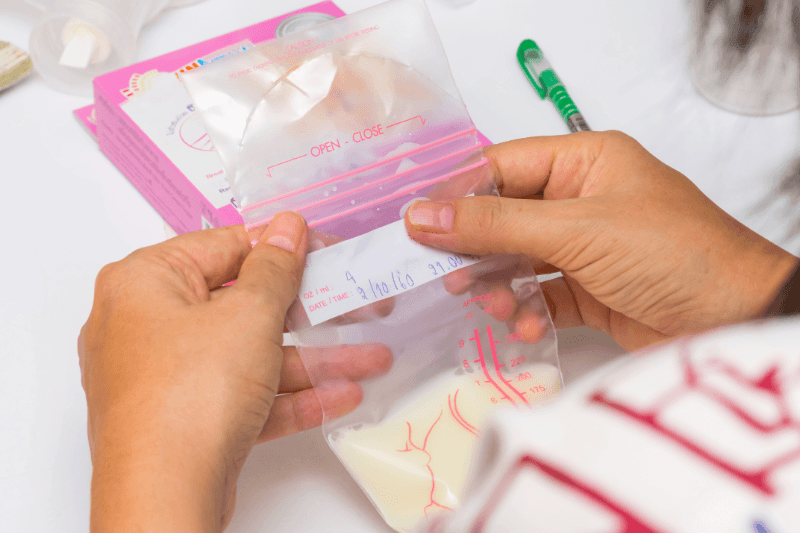

And here’s a little tip from one mum to another: label your milk with the date you expressed it.
You might think you’ll definitely remember when you pumped that particular bag. But give it a few weeks, a few broken nights of sleep, and several bags in the freezer, and suddenly you’re staring at them thinking, “Was this Monday’s milk or Wednesday’s?”
Label it. Your sleep-deprived future self will thank you.
What’s the Best Way to Store Breast Milk?
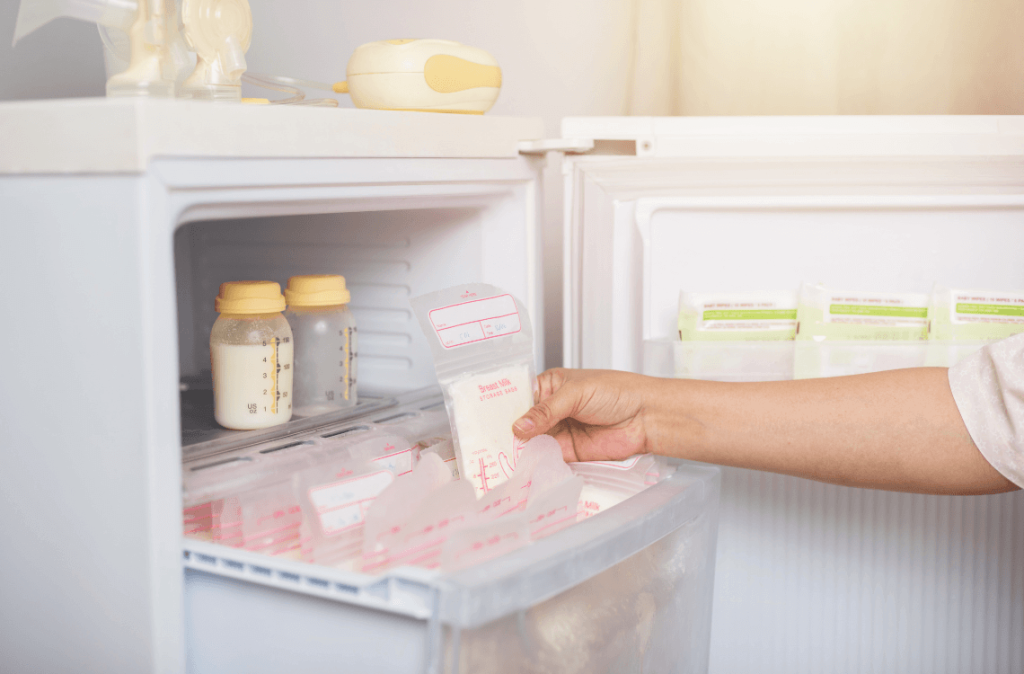
If you’re putting expressed milk into the refrigerator or freezer, store it towards the back rather than in the door.
The temperature in the door can fluctuate more when it is opened and closed frequently. Keeping your breast milk further inside helps protect it from those temperature changes.
If you’re freezing milk, consider storing it in smaller portions too.
You don’t necessarily need to freeze one huge bag every time. Smaller amounts can make it easier to thaw only what your baby needs, which means less precious expressed milk potentially going to waste.
The CDC recommends storing around 2–4 ounces (about 60–120 ml) or the amount offered at one feeding. Leave about an inch of space at the top because breast milk expands as it freezes.
Can You Put Freshly Pumped Breast Milk Straight in the Fridge?
Yes.
If you don’t plan to use freshly expressed breast milk within the room-temperature storage window, you can refrigerate it.
If you don’t think you’ll use it within four days, the CDC recommends freezing it sooner to help maintain its quality.
For mums who pump several times a day, I’d also recommend getting into the habit of dating everything.
It may sound like such a small thing, but when you’re tired and have several bags of milk sitting in the fridge, knowing exactly which one was expressed first makes life much easier.
Can I Mix Freshly Pumped Milk with Chilled Breast Milk?
This is another question that comes up often, especially when you’re pumping several times throughout the day.
The CDC recommends cooling freshly expressed breast milk before adding it to milk that is already chilled.
So, don’t pour warm, freshly pumped milk straight into a container of cold milk.
If you’re combining milk expressed at different times, remember that the storage timeframe should be counted from when the older milk was first stored.
How Do I Thaw Frozen Breast Milk Safely?
When you’re ready to use frozen breast milk, you can thaw it gradually in the refrigerator.
Need it sooner? You can place the sealed container in warm or lukewarm water or hold it under lukewarm running water.
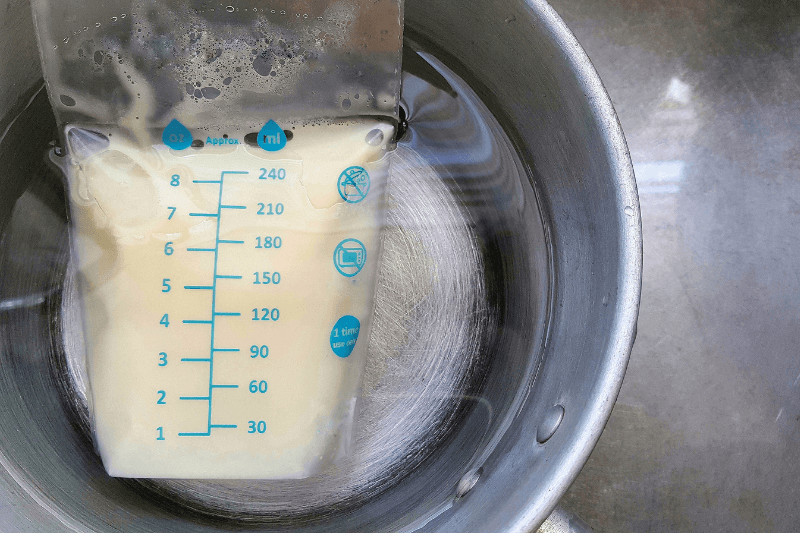
And yes, I know – when your baby is hungry and you’re trying to get a bottle ready quickly, the microwave can seem very tempting.
But don’t microwave breast milk.
Microwaving can heat milk unevenly and create hot spots that could burn your baby’s mouth. The CDC also advises against heating breast milk directly on the stove.
As mums, we’re often doing things one-handed while trying to keep a hungry baby happy. But this is one shortcut worth skipping.
How Long Can Thawed Breast Milk Stay in the Fridge?
If you’ve thawed frozen breast milk in the refrigerator, the CDC recommends using it within 24 hours.
That 24-hour countdown starts once the milk has completely thawed, rather than from the moment you take it out of the freezer.
Once thawed breast milk has been brought to room temperature or warmed, it should be used within two hours.
And once frozen milk has completely thawed, don’t refreeze it.
I know it can be heartbreaking to discard breast milk you’ve spent time expressing, but when it comes to your baby’s safety, it’s better not to take chances.
Does Breast Milk Need to Be Warmed?
Not necessarily.
Some babies are perfectly happy drinking breast milk cold or at room temperature. If your baby doesn’t mind, there’s no need to warm it simply because you think you’re supposed to.
If your baby prefers warm milk, keep the container sealed and place it in warm water or hold it under warm running water for a few minutes.
You can test a few drops on your wrist before feeding to make sure it isn’t too hot.
You might also notice that stored breast milk separates, with the creamier, fatty part rising to the top. That’s completely normal.
Rather than shaking the milk vigorously, gently swirl the container to mix the layers back together.
What If My Baby Doesn’t Finish the Bottle?
This one can hurt a little.
If you’ve ever spent 20 minutes pumping, carefully stored the milk and then watched your baby take three sips before deciding they’re done, you know exactly what I mean.
Unfortunately, once your baby has started drinking from a bottle, the remaining milk can’t simply go back into the fridge indefinitely.
According to the CDC, leftover breast milk from a feeding should be used within two hours. After that, it should be discarded.
To reduce waste, you can start by offering smaller amounts and add more if your baby is still hungry.
It may take a little trial and error to work out how much your baby usually drinks at a particular feed – and that’s okay.
How Do You Transport Breast Milk Safely?
Going back to work? Spending the day outside? Heading out for an appointment with your little one?
An insulated cooler with frozen ice packs can keep freshly expressed breast milk cold for up to 24 hours, according to the CDC. Once you reach your destination, the milk should be used, refrigerated or frozen.
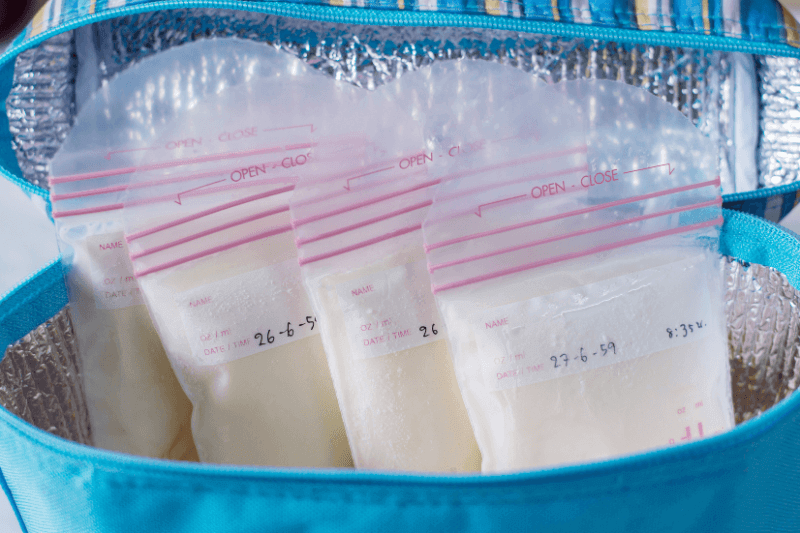
For working mums, a simple routine can help:
Pump → label → chill → transport in a cooler → refrigerate or freeze.
That’s it.
If your baby is cared for by a nursery, babysitter or family member, make sure they know how you’ve labelled the milk and how you’d like it handled.
The CDC recommends clearly labelling breast milk with your child’s name when sending it to a childcare provider.
Breast Milk Storage FAQs
How long can breast milk stay out at room temperature?
Freshly expressed breast milk can be kept at a room temperature of 25°C or cooler for up to four hours, according to current CDC guidance. If the environment is warmer, refrigerate or properly chill the milk as soon as possible.
How long does breast milk last in the fridge?
Freshly expressed breast milk can be stored in the refrigerator for up to four days, according to current CDC guidance. Store it towards the back of the refrigerator rather than in the door, where temperatures can fluctuate more.
How long does breast milk last in the freezer?
The CDC says about six months is best for quality, although breast milk can be kept frozen for up to 12 months.
Can I microwave breast milk?
No. Breast milk should not be microwaved because it can heat unevenly and create hot spots that may burn your baby’s mouth. Warm it using warm water instead.
Can I refreeze thawed breast milk?
No. Once frozen breast milk has completely thawed, it should not be refrozen. If it was thawed in the refrigerator, use it within 24 hours.
Does breast milk have to be warmed?
No. Breast milk can be offered cold or at room temperature if your baby is happy with it. If you warm it, use warm water rather than direct heat or a microwave.
How can I avoid wasting breast milk?
Try storing expressed milk in smaller portions, roughly around the amount your baby usually takes at one feed. That way, you only need to thaw or warm what you think your baby will drink.
As Mums, we’re learning too.
From a fellow mummy, I know how easy it is to feel like you’re supposed to know all of this already.
Breastfeeding, pumping and storing milk can come with a surprising number of little rules, and when you’re already tired and caring for a baby, it’s easy to wonder whether you’re doing something wrong.
You’re not.
Start with the basics: clean hands and pump equipment, appropriate storage temperatures, clear labels, and safe thawing and warming practices.
Once you’ve found a routine that works for you and your baby, it usually becomes much easier.
And if you do make a mistake or find yourself unsure about whether a particular batch of milk is safe, don’t beat yourself up. When in doubt, check the latest guidance or speak to your baby’s healthcare professional.
If your baby was born prematurely, is unwell or is receiving care in hospital, general storage recommendations may not apply to your situation. Follow the specific advice given by your baby’s healthcare team. The NHS also advises parents of premature or sick babies to ask their hospital team about breast milk storage.
Most importantly, give yourself some grace.
You’re not just learning how to store breast milk. You’re learning how to care for a whole new little person – while figuring out motherhood yourself along the way.
And honestly, that’s more than enough to have on your plate.
Disclaimer: The information provided in this article is for informational purposes only and should not be considered medical advice from Motherhood. For any health-related concerns, it is advisable to consult with a qualified healthcare professional or medical practitioner.
For more insightful stories and parenting advice, stay tuned to Motherhood Story!