

At A Glance:
- A new YouGov study of over 200,000 adults across four markets finds that while more than 70% aspire to be healthy, at least one in three admits they do not look after their health as much as they should1. In Malaysia, over two in five skipped health screening in the past year, with most citing that they felt healthy1,2.
- According to the Department of Statistics Malaysia’s 2025 report, pneumonia was the second leading cause of death in Malaysia in 2024 and the leading cause of death among adults aged 60 and above3. The finding underscores the growing importance of respiratory health in an ageing population already carrying a heavy chronic disease burden, with 39% of older Malaysians living with diabetes, 73% with hypertension, and 30% with all three major chronic conditions4.
- In conjunction with World Immunization Week, “For the Reasons that Matter” launches across Malaysia, Indonesia, Singapore and the Philippines as a unified regional campaign to raise awareness of adult respiratory health and support healthier ageing.
Malaysia, Indonesia, Singapore and the Philippines are home to a combined population of more than 300 million people5. All four markets are ageing6-9. All four carry a significant and growing burden of chronic disease.
And in all four, a new YouGov study of more than 200,000 adults reveals a consistent and troubling pattern: over 70% aspire to be fit and healthy, yet at least one in three admits they do not look after their health as much as they should1.
In conjunction with World Immunization Week, Pfizer Malaysia, together with healthcare professionals, has launched “For the Reasons that Matter”, a public awareness campaign focused on adult respiratory health.
Rolling out simultaneously across Malaysia, Indonesia, Singapore and the Philippines, the campaign brings together medical experts and healthcare professionals to raise awareness of how serious respiratory illnesses, including COVID-19, influenza, respiratory syncytial virus (RSV) and pneumococcal pneumonia, can affect quality of life, independence and the ability to remain present for the people and responsibilities that matter most26.
“Across all four of our markets, we are seeing a clear gap between what adults want for their health and the steps they take to protect it1. Many adults care deeply about staying well, yet conversations about respiratory health are often delayed until something feels urgent.

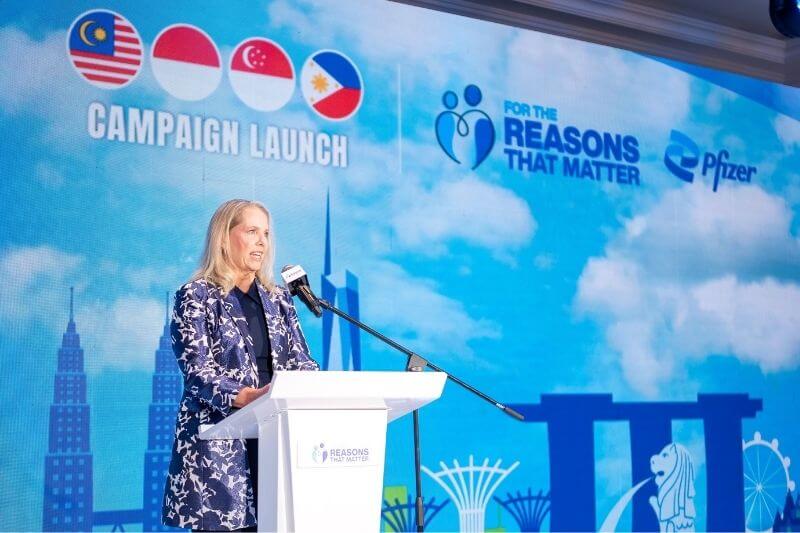
‘For the Reasons that Matter’ was created to make this conversation more relevant, more human and more actionable. It is about helping adults stay well as they get older, with healthcare professionals playing a vital role in guiding those conversations,” said Ms Deborah Seifert, Cluster Lead, Pfizer Malaysia, Singapore, Indonesia and the Philippines.
Across these four countries, serious respiratory illnesses do not wait for a convenient moment to strike1,10. Malaysia illustrates the stakes with particular clarity. According to the Department of Statistics Malaysia’s 2025 report, pneumonia was the second leading cause of death in Malaysia in 2024 and the leading cause of death among adults aged 60 and above3.
This is a disease category that falls hardest on older adults and those already managing chronic conditions, precisely the groups that define Malaysia’s demographic present and near future11,12.
Adults aged 60 and above now make up 12% of the national population, with the elderly projected to reach 5.8 million by 203012,13. Alongside this ageing trajectory, Malaysia carries one of the highest chronic disease burdens in the region. The National Health and Morbidity Survey 2025 found that 39% of older Malaysians have diabetes, 73% have hypertension and 76% have high cholesterol.
Critically, 30% are living with all three conditions simultaneously, and one in two of those with known diabetes or hypertension carry their condition in an uncontrolled state4.
Turning Awareness into Action

World Immunization Week, observed annually in the last week of April, is a reminder that the science of protection has no age limit14. Serious respiratory illnesses, including influenza, COVID-19, RSV and pneumococcal pneumonia, are not only childhood concerns10,11.
For adults, particularly those with underlying health conditions or advancing age, they can interrupt working lives, strain families and trigger complications with lasting consequences for health and independence. Respiratory illnesses do not check your calendar, and they do not wait for a convenient time to strike.
The NHMS 2025 brings this closer to home. According to the survey, only 14.7% of older Malaysians are ageing well across all five key markers of healthy ageing, a figure that declines further as people get older4.
For many adults, feeling well today is not the same as being on track for the years ahead. For those already managing diabetes, hypertension or other chronic conditions, serious respiratory illnesses such as COVID-19, influenza, RSV and pneumococcal pneumonia do not arrive in isolation.
They can destabilise years of carefully managed health, trigger hospitalisation and impose a burden on families that is often invisible until it is already being felt10,15,16.
“Respiratory health often feels invisible until something goes wrong. Unlike a sprained ankle or a skin condition, you cannot see your lungs. So people assume they are fine.
But respiratory illnesses like pneumococcal pneumonia, influenza, COVID-19 and RSV are not just inconveniences. They can lead to serious complications, especially as we age17-20.
Protection against respiratory illnesses is not about adding another task to your to-do list. It is about protecting your ability to keep doing everything else on that list,” shared Dr Rokeshwar Hari Dass, Head of Corporate Health, Marketing and Communication, CareClinics Healthcare Services.
The Role of Healthcare Professionals
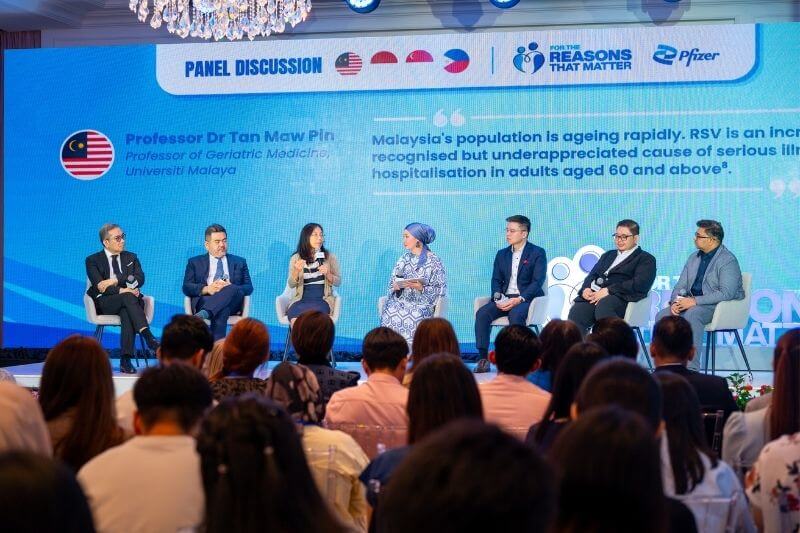
Healthcare professionals remain the single most powerful influence on whether adults take health action. The YouGov study found that 57% of Malaysian adults say they only act on their physician’s recommendation, while 52% research health matters independently before consulting a doctor1.
This dual behaviour, self-directed inquiry followed by clinical validation, places healthcare professionals at a critical juncture: they are not only the most trusted voice, they are the point at which awareness becomes decision1.
The information landscape complicates this picture. Social media is cited as a health information source by 56% of Malaysian adults, nearly on par with doctors and healthcare professionals at 47%1.
Adults are already searching. They are already forming views about respiratory health online.
The opportunity for healthcare professionals is to meet them in that process: to welcome the research patients bring into the clinic, to separate fact from misinformation, and to turn a digital impression into a meaningful, personalised conversation.

“When I ask my patients what they want from ageing, nobody says they want to live as long as possible. What they say is: I want to stay independent. I want to keep playing with my grandchildren. I want to travel. I do not want to be a burden. Respiratory health is central to that vision.
The decisions we make in our fifties and sixties shape what our seventies and eighties look like. That is not about fear. It is about agency, and about choosing the kind of elder you want to become,” shared Professor Dr Tan Maw Pin, Professor of Geriatric Medicine, Universiti Malaya.
“For older adults, the consequences of serious respiratory illnesses such as RSV, influenza, COVID-19 and pneumococcal pneumonia can extend well beyond the acute episode itself. As the body ages, recovery takes longer, complications are more likely, and a single respiratory event can trigger a cascade of health challenges, from deconditioning and falls to cognitive decline and loss of independence17,18,19,21,22.
The campaign’s emphasis on healthy ageing is not incidental. It is the clinical reality that makes the conversation urgent,” added Professor Dr Tan Maw Pin.

“Many adults do not fully understand the burden of serious respiratory illnesses such as COVID-19, influenza, RSV and pneumococcal pneumonia. They do not know that their age and their underlying conditions put them at elevated risk10.
We have the responsibility to advise when patients are still healthy and still making choices. That is when we can raise awareness and make a real difference.
Once someone is already seriously ill, we are managing consequences. We want to be upstream of that moment, not downstream,” shared Dr Rokeshwar Hari Dass.
At the heart of the campaign is a simple but powerful truth: adults protect their health not for health’s sake alone, but for the people and the life they cannot afford to lose. It is the grandmother who insists on being present at every family gathering. The father who still needs to be on the field for his son’s match.
The working professional who has spent decades building something and cannot afford to have it interrupted. The caregiver holding two generations together, who has not paused to consider what happens if they fall ill.
For many Malaysian adults, the sandwich generation reality is deeply familiar: caring simultaneously for ageing parents and growing children, managing household responsibilities alongside career demands, and placing their own health consistently last on the list. “For the Reasons that Matter” reframes that instinct.
Looking after your respiratory health is not self-care at the expense of your family. It is the most responsible thing you can do for the people who depend on your continued presence.
Adults, especially older adults and those with conditions such as diabetes, hypertension or chronic lung disease, should speak to a doctor about maintaining their health and reducing their risk of serious respiratory illnesses such as COVID-19, influenza, RSV and pneumococcal pneumonia10,22,23,24.
References
- YouGov. Adult Protection Pulse: Awareness, Perception and Behaviour Study. YouGov, 2026. n>200,000 adults across Malaysia, Indonesia, Singapore and the Philippines. Data on file. Accessed on 21 April 2026.
- Ministry of Health Malaysia: Institute for Public Health. National Health & Morbidity Survey 2023. Retrieved from: https://iku.nih.gov.my/images/nhms2023/key-findings-nhms-2023.pdf. Accessed on 21 April 2026.
- Ministry of Economy: Department of Statistics Malaysia. Statistics on Causes of Death, Malaysia, 2025. Retrieved from: https://www.dosm.gov.my/portal-main/release-content/statistics-on-causes-of-death-malaysia-2025. Accessed on 21 April 2026.
- Ministry of Health Malaysia: Institute for Public Health. National Health & Morbidity Survey 2025. Retrieved from: https://iku.nih.gov.my/images/nhms-2025/infographic-eng.pdf. Accessed on 23 April 2026.
- Statista. Estimated population of ASEAN member states in 2026. Retrieved from: https://www.statista.com/statistics/796222/total-population-of-the-asean-countries/?srsltid=AfmBOooAA2_5AcnR4zb43f-iE9Y9YwtG1gTQSL2XRIEDqpOst2FLRhsH. Accessed on 21 April 2026.
- United Nations Development Programme. Navigating the future of care for older persons in Malaysia by 2040: From community support to technological integration. Retrieved from: https://www.undp.org/malaysia/blog/navigating-future-care-older-persons-malaysia-2040-community-support-technological-integration. Accessed on 23 April 2026.
- Basrowi, R. W, et al. 2021. The Road to Healthy Ageing: What Has Indonesia Achieved So Far? Nutrients, 13(10):3441. DOI: 10.3390/nu13103441.
- Ministry of Health Singapore. Ageing in the community. Retrieved from: https://www.moh.gov.sg/ageing-well/ageing-in-the-community/. Accessed on 23 April 2026.
- Economic Research Institute for ASEAN and East Asia (ERIA). The Shifting Demographics of the Philippines: Towards an Ageing Society. Retrieved from: https://www.eria.org/uploads/8_Ch_1-Shifting_Demographic.pdf. Accessed on 23 April 2026.
- Centers for Disease Control and Prevention. People at Increased Risk for Severe Respiratory Illnesses. Retrieved from: https://www.cdc.gov/respiratory-viruses/risk-factors/index.html. Accessed on 21 April 2026.
- Centers for Disease Control and Prevention. Risk Factors for Pneumonia. Retrieved from: https://www.cdc.gov/pneumonia/risk-factors/index.html. Accessed on 21 April 2026.
- Abdullah, J. M, et al. 2024. Healthy Ageing in Malaysia by 2030: Needs, Challenges and Future Directions. The Malaysian Journal of Medical Sciences, 31(4), 1–13. DOI: 10.21315/mjms2024.31.4.1.
- Ministry of Economy: Department of Statistics Malaysia. Current Population Estimates by Administrative District, 2024. Retrieved from: https://www.dosm.gov.my/portal-main/release-content/current-population-estimates-by-administrative-district-2024. Accessed on 21 April 2026.
- World Health Organization. World Immunization Week 2026. Retrieved from: https://www.who.int/news-room/events/detail/2026/04/24/default-calendar/world-immunization-week-2026–for-every-generation–vaccines-work. Accessed on 24 April 2026.
- Al-Sayyar, A, et al. 2022. Respiratory Tract Infections in Diabetes – Lessons From Tuberculosis and Influenza to Guide Understanding of COVID-19 Severity. Frontiers in Endocrinology, 13(919223). DOI: https://doi.org/10.3389/fendo.2022.919223.
- Centers for Disease Control and Prevention. People with Chronic Medical Conditions Continue to Account for The Majority of Flu Hospitalizations This Season. Retrieved from: https://www.cdc.gov/flu/whats-new/2023-2024-higher-risk-hospitalizations.html#:~:text=At%20a%20glance,heart%20attack%2C%20coronary%20artery%20disease. Accessed on 21 April 2026.
- Cheong, D & Song, J. Y. 2024. Pneumococcal disease burden in high-risk older adults: Exploring impact of comorbidities, long term care facilities, antibiotic resistance, and immunization policies through a narrative literature review. Human Vaccines & Immunotherapeutics, 20(1), 2429235, 1-16. DOI: 10.1080/21645515.2024.2429235.
- National Institute of Aging. Flu and Older Adults. Retrieved from: https://www.nia.nih.gov/health/flu/flu-and-older-adults. Accessed on 22 April 2026.
- WebMD. RSV in Older Adults. Retrieved from: https://www.webmd.com/lung/rsv-affects-whole-family. Accessed on 22 April 2026.
- Mayo Clinic. Coronavirus disease 2019. Retrieved from: https://www.mayoclinic.org/diseases-conditions/coronavirus/symptoms-causes/syc-20479963. Accessed on 23 April 2026.
- WebMD. How Aging Affects Your Immune System. Retrieved from: https://www.webmd.com/healthy-aging/seniors-boost-immunity. Accessed on 22 April 2026.
- Andrew, M. K, et al. 2020. Persistent Functional Decline Following Hospitalization with Influenza or Acute Respiratory Illness. Journal of the American Geriatrics Society, 69(3):696 – 703. DOI: 10.1111/jgs.16950.
- Centers for Disease Control and Prevention. Flu and People with Diabetes. Retrieved from: https://www.cdc.gov/flu/highrisk/diabetes.html. Accessed on 22 April 2026.
- Centers for Disease Control and Prevention. Managing High Blood Pressure. Retrieved from: https://www.cdc.gov/high-blood-pressure/living-with/index.html. Accessed on 22 April 2026.
- YouGov. Methodology. Retrieved from: https://yougov.com/about/methodology. Accessed on 22 April 2026.
- Forum of International Respiratory Societies. The Global Impact of Respiratory Disease: Third Edition. Retrieved from: https://firsnet.org/wp-content/uploads/2025/01/FIRS_Master_09202021.pdf. Accessed on 27 April 2026.
Disclaimer: The information provided in this article is for informational purposes only and should not be considered as medical advice from Motherhood. For any health-related concerns, it is advisable to consult with a qualified healthcare professional or medical practitioner.
For more insightful stories and fun recipes, stay tuned to Motherhood Story!