
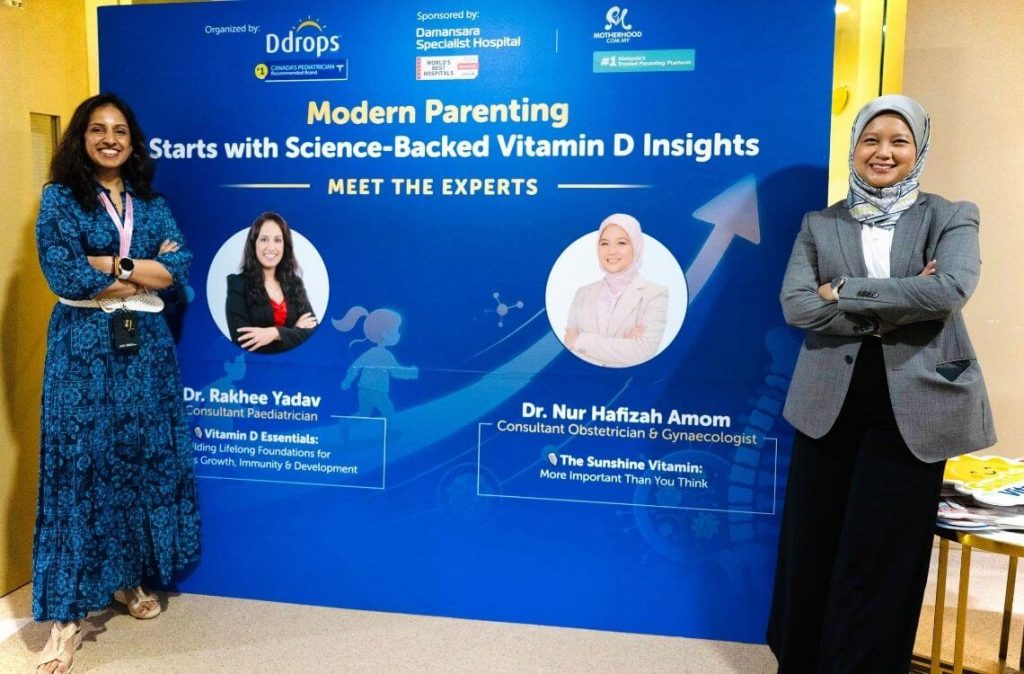
From preconception and pregnancy through to childhood growth, Ddrops® partnered with Damansara Specialist Hospital and Motherhood.com.my to turn medical expertise into practical health guidance for families.
“Malaysia has sunshine all year round, so why do we still need to concern about vitamin D?”
This seemingly simple question points to a health blind spot that many families may overlook. On 5 September 2026, Ddrops®, Damansara Specialist Hospital and Motherhood.com.my hosted a family health forum dedicated to vitamin D.
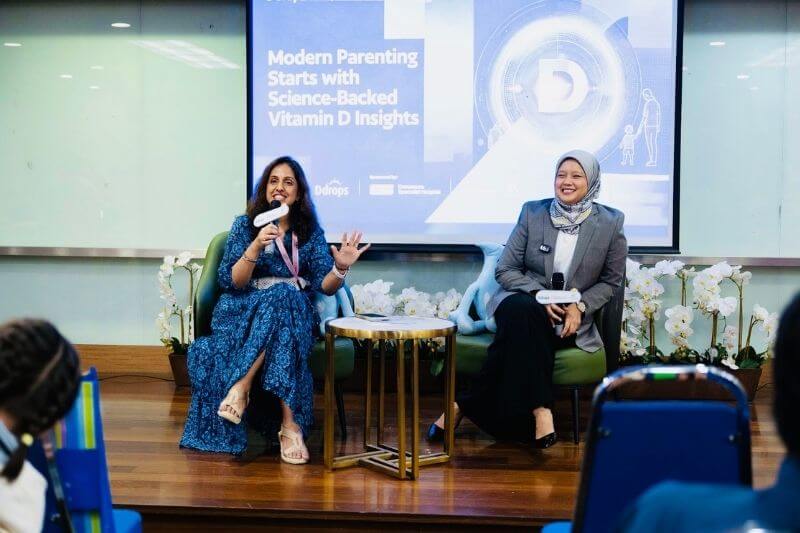

Dr Rakhee Yadav, Senior Consultant Paediatrician, Head Department of Paediatrics, and Dr Nur Hafizah Amom, Consultant Obstetrics & Gynaecology at Damansara Specialist Hospital explored the role of vitamin D across different stages of life, from women’s health and pregnancy to children’s growth and development, while addressing the everyday health and nutrition concerns of families.
Why Talking About Vitamin D in Sunny Malaysia Matters
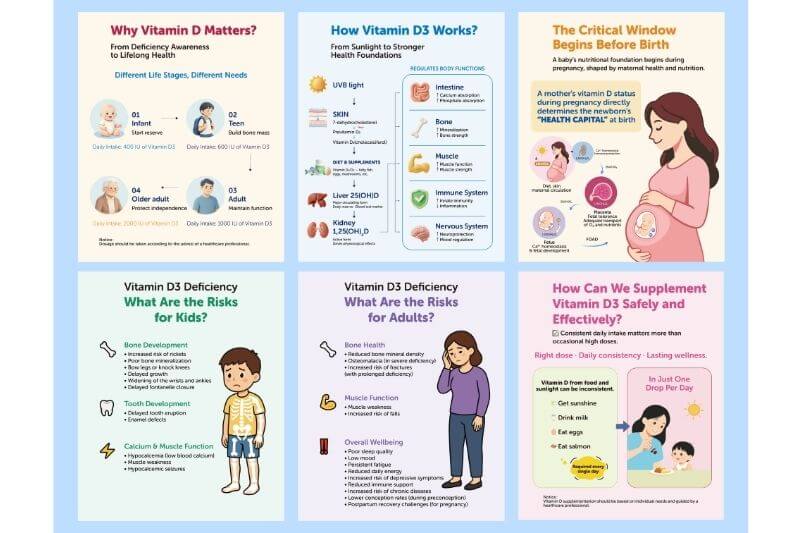
In Malaysia, sunshine is rarely in short supply. Yet plenty of sunlight does not necessarily mean adequate vitamin D levels. Indoor lifestyles, skin pigmentation, clothing, sun-protection practices, the timing and duration of outdoor exposure, and dietary habits can all influence vitamin D status.
The two medical experts began with a simple but often overlooked fact. The body gets vitamin D mainly through three sources: synthesis in the skin following exposure to UVB rays, dietary intake, and supplementation when needed.
Vitamin D’s most firmly established role is to support the absorption and utilisation of calcium and phosphate, thereby enabling normal bone mineralisation. Severe vitamin D deficiency can lead to rickets in children and osteomalacia in adults.
Vitamin D also supports muscle function and plays a part in various immune processes. Maintaining an adequate vitamin D status is therefore an important part of overall health management.
However, parents should not expose themselves or their children to the risk of sunburn to obtain vitamin D. Dr Nur Hafizah Amom highlighted that sunscreen can reduce the amount of UVB reaching the skin, but this does not mean families should stop protecting their skin.
A more practical approach for modern families is to combine safe outdoor activity with foods that naturally contain vitamin D or are fortified with it. Supplements may also be considered when needed. This makes vitamin D management safer, more consistent and easier to maintain over the long term.
Dr Rakhee Yadav : Children Need Strong Foundations, Not a “High-Dose” Myth
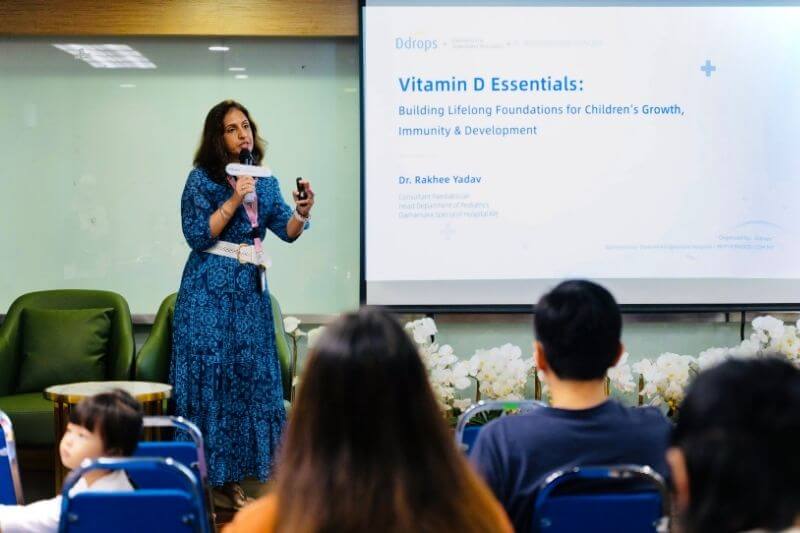
Dr Rakhee Yadav, Senior Consultant Paediatrician, Head Department of Paediatrics, focused on a basic but often overlooked point: children need a stable nutritional foundation from an early age, rather than waiting for a problem to emerge before turning to high-dose solutions.
Vitamin D supports children’s growth, bone mineralisation, muscle function and immune regulation. However, it should always be understood within the wider framework of children’s health. Balanced nutrition, enough sleep, regular physical activity, vaccination and appropriate preventive healthcare all remain essential.
Severe vitamin D deficiency can first affect bone and muscle health. Children may experience impaired growth, bowing of the legs, widening of the wrists or ankles, bone pain and muscle weakness. Poor bone mineralisation may also increase the risk of fractures. In severe cases accompanied by hypocalcaemia, children may develop muscle spasms, tetany or seizures.
Dr Rakhee Yadav explained that children with limited sun exposure or darker skin pigmentation, those living with obesity, those following diets low in vitamin D, and those with malabsorption, chronic liver or kidney disease, or exposure to medications that interfere with vitamin D metabolism may be at increased risk of vitamin D deficiency.
Exclusively breastfed infants who do not receive vitamin D supplementation may also be at greater risk of vitamin D insufficiency. Breast milk remains a high-quality source of nutrition, but it is naturally low in vitamin D. For formula-fed infants, parents should consider both the vitamin D content of the formula and the actual amount of formula the baby consumes each day.
When it comes to supplementation, “how much is needed every day” and “how much is needed to treat a deficiency” are two different questions.
The dietary reference intakes cited by the U.S. National Institutes of Health are 400 IU per day for infants aged 0 to 12 months and 600 IU per day for children and adolescents aged 1 to 18 years.

These reference intakes should not be confused with therapeutic doses for treating deficiency. For infants and young children, parents should consider the product label, feeding method and actual daily intake, and consult a paediatrician or pharmacist when needed rather than assuming that a higher dose is better.
However, the decision to test should depend on the child’s individual circumstances.
Doctors may consider whether the child has relevant risk factors or symptoms, and whether the test result would affect clinical management. In other words, good vitamin D management does not mean pursuing more tests or higher doses. It means assessing each child appropriately and taking suitable nutritional action when there is a clear need.
Dr Nur Hafizah Amom: Vitamin D Matters at Every Stage of a Woman’s Life
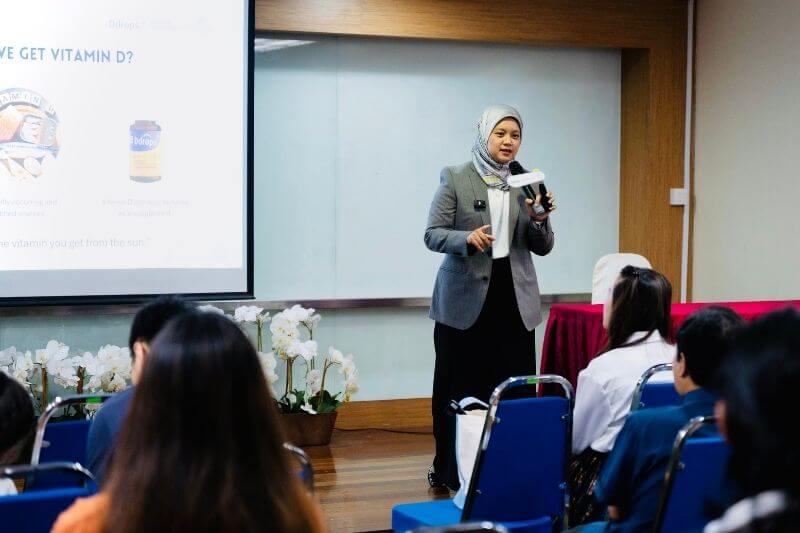
Consultant Obstetrician and Gynaecologist Dr Nur Hafizah Amom explored vitamin D across the different stages of a woman’s life. From preconception and pregnancy to the postpartum period and menopause, women experience continuing physiological changes, and vitamin D carries different clinical considerations at each stage.
Vitamin D is produced primarily in the skin following sunlight exposure and can also be obtained through food and supplementation. Once in the body, vitamin D is metabolised and contributes to the regulation of calcium and phosphate, as well as other physiological processes.
The key is not to view vitamin D as a nutrient that matters only at one particular stage of life, but to understand how it relates to women’s changing physiological and nutritional needs over time.
During preconception, the relationship between vitamin D and reproductive health has attracted increasing research interest. Vitamin D receptors are present in reproductive tissues, and some studies have observed associations between vitamin D status and ovarian function, the endometrial environment, embryo implantation and early pregnancy.
These findings provide possible directions for understanding vitamin D’s involvement in reproductive physiology. However, current evidence does not support treating vitamin D status as a direct predictor of fertility or pregnancy success. For women planning a pregnancy, vitamin D should therefore be considered within a broader assessment of preconception nutrition and overall health.
As pregnancy progresses, vitamin D becomes relevant to both maternal and fetal health. Maternal vitamin D status is associated with the newborn’s vitamin D status at birth, while vitamin D contributes to maternal calcium and phosphate metabolism and fetal skeletal development.
Researchers continue to study the relationship between vitamin D and pregnancy outcomes, including pre-eclampsia, gestational diabetes, preterm birth, fetal growth, and birth weight.
However, findings have not always been consistent. Families and healthcare professionals should therefore distinguish between meeting routine nutritional needs, treating a confirmed deficiency, and using high-dose supplementation to target a specific pregnancy outcome. These are different clinical situations and should not be treated as the same.
Women’s health extends well beyond pregnancy. In recent years, growing research has examined the potential relationship between vitamin D status, mood, sleep and psychological well-being.
Some observational studies have linked lower vitamin D levels with poorer sleep quality and more depressive symptoms. However, these findings demonstrate association rather than proof that vitamin D supplementation directly improves sleep or mood. The value of this research lies in offering a broader perspective on the complex relationship between nutritional status and women’s overall physical and emotional well-being.
As women enter menopause, attention gradually shifts towards long-term bone and muscle health. Ageing and hormonal changes can affect both bone mass and muscle mass.
Maintaining strong bones, mobility and physical function therefore becomes increasingly important. Vitamin D helps the body absorb and use calcium. It also supports normal muscle function. At the same time, adequate protein intake, regular weight-bearing exercise and healthy lifestyle habits remain essential foundations of health during this stage.
From preconception and pregnancy to menopause, women’s bodies continue to evolve. At every stage, women can benefit from reviewing their nutritional needs and finding the right balance between scientific guidance and their individual circumstances.
5 Vitamin D Tips: Turning Knowledge into Everyday Practice
1. Different Dosage Needs at Different Life Stages: Nutritional needs evolve across a woman’s life stages, from preconception and pregnancy through postpartum and menopause, as well as across a child’s development from infancy to adolescence. Vitamin D needs should be considered according to age and individual circumstances.
2. Understand Different Sources: Sunlight, naturally vitamin D-rich foods, fortified foods and supplements can all contribute to vitamin D status. Families should consider how these different sources fit into their daily routine.
3. Read Product Labels Carefully: The amount of vitamin D can vary between products. Always check the label to understand the actual dose and avoid taking the same nutrient from multiple sources without realising it.
4. More Is Not Always Better: Do not increase the dose simply in response to recurrent illness, pregnancy-related anxiety or sleep concerns without appropriate guidance. A healthcare professional should be consulted when there is uncertainty.
5. Pay Attention to Higher-Risk Groups: Preterm infants, individuals following restrictive diets, those living with malabsorption or chronic liver or kidney disease, or those taking certain medications may require a more individualised assessment.
From One Conversation to Long-Term Health Support

Meaningful health education shouldn’t end with an event. When we translate science into clear language and bring professional medical guidance into real-life parenting situations, knowledge can move beyond one-time awareness and become a lasting family health habit.
Through this collaboration with Damansara Specialist Hospital and Motherhood.com.my, Ddrops® sought to build a lasting connection with families, grounded in scientific understanding, informed by medical expertise, and shaping how families approach everyday health and nutrition.
For Malaysian families today, the challenge is not a lack of health information.
It’s about knowing what information to trust and what steps to take. What families often need most is the ability to make sound decisions amid an overwhelming amount of information.
By connecting medical expertise and scientific knowledge with the real needs of families, Ddrops® aims to move every conversation about nutrition and health beyond awareness and towards meaningful action, action that supports mothers’ well-being and children’s healthy growth.
Disclaimer: The information provided in this article is for informational purposes only and should not be considered as medical advice from Motherhood. For any health-related concerns, it is advisable to consult with a qualified healthcare professional or medical practitioner.
For more insightful stories and fun recipes, stay tuned to Motherhood Story!