


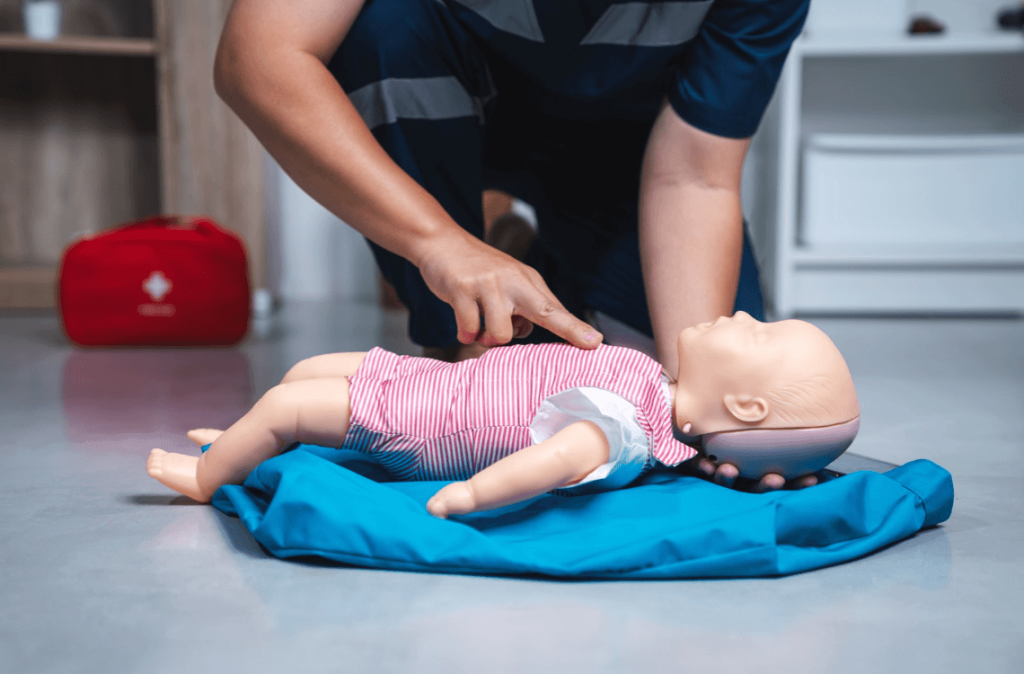
A choking scare can turn an ordinary family meal upside down. Nurse Chia Yen shares what parents should look for, why CPR training matters and how to make everyday risks easier to spot.
Coughing and Choking Are Different
Picture this: you’re clearing dinner when your toddler starts coughing. That sudden sound can stop a conversation in its tracks. Chia Yen, Founder and Lead Trainer at Hero Hands Enterprise, says coughing during a feed may happen as a baby learns to coordinate swallowing. Milk flowing too quickly can also cause coughing.
Chia explains that gagging usually sounds more like retching, and a baby’s face may turn red. Coughing often sounds hacking as the body tries to clear an irritant. A complete airway blockage is different. It may be silent: a child cannot cough, cry or make a sound. Their skin may look blue, pale or grey. “It would be silent,” Chia says.
Stay Focused and Get Help
Panic can make anyone reach for the wrong response. Chia warns against holding a baby upside down. A panicked caregiver could drop the baby, and stomach contents could enter the airway. She also cautions against sweeping blindly inside a child’s mouth. If you cannot see an object, you might push it further in. Giving water will not clear an obstruction.
If a child goes limp or becomes unresponsive, Chia says to check for a response and look for breathing. Ask someone nearby to call emergency services. They can also bring an AED, if one is available. If you are alone, Chia advises beginning CPR first. If you have a phone, she says you can call on speaker while starting. Follow the dispatcher’s guidance.
Chia says CPR may break a baby’s rib, and that possibility can feel frightening. Still, she encourages parents to act rather than freeze. If you have not taken a course, she says to “push hard and push fast.” Learn the correct technique from a qualified instructor.
Why CPR Training Matters
Parents, grandparents and helpers can all learn CPR before an emergency happens. Chia is a registered nurse and NHAM BLS Instructor. She holds a BN (Hons) in Nursing and founded Hero Hands Enterprise. She says training can turn panic into muscle memory, helping caregivers respond when every second feels difficult.
Infant and child CPR are not identical. Techniques and compression depth change as a child grows. A course can show you how to adjust for a child’s age and size. Chia says an AED, or automated external defibrillator, uses voice prompts to guide people. She says families may find AEDs in places such as shopping malls and car parks. Notice where one is during your usual outings.
Chia says CPR can stop when the child shows signs of life, medical personnel arrive, or the rescuer is too exhausted to continue effectively. She encourages parents and caregivers to refresh their skills regularly. For families, she suggests taking a refresher course at least once a year.
Make Mealtimes Safer
Some foods can be difficult for young children to manage. Chia mentions popcorn, including its hard kernels, and jelly as examples parents may overlook. She says round foods deserve extra attention. For baby-led weaning, check with your paediatrician first. Children reach developmental milestones at different times, so readiness can vary.
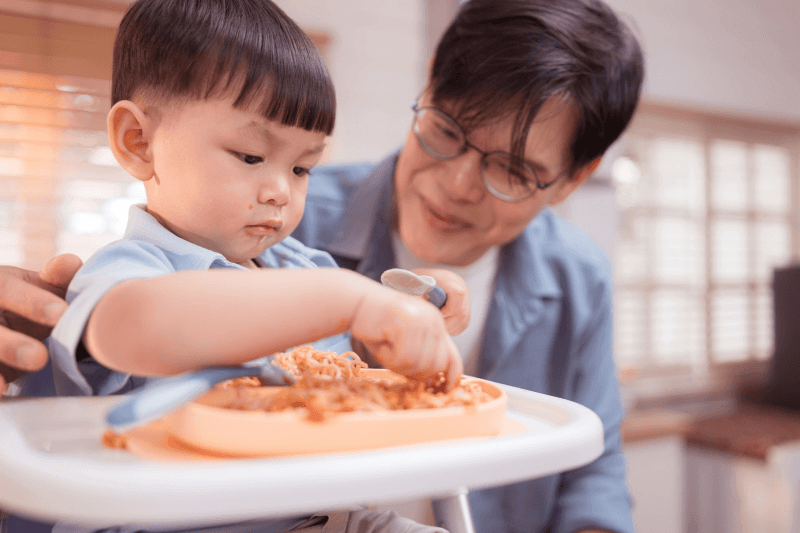

When preparing food, Chia suggests offering soft pieces cut into longer shapes. Avoid small, round pieces, she advises. Have your child sit upright at a table or high chair. Stay close and attentive while they eat, especially when they are learning. It is easier to relax once eating feels familiar, but supervision still matters.
Look Beyond Food
Children explore the world with their mouths, so small household items matter too. Chia names button batteries, coins, magnets, small toy parts and detergent pods as hazards. Store them securely and out of reach. A swallowed button battery needs urgent medical attention. Chia advises going to the emergency department promptly. For swallowed coins, she also recommends emergency assessment. A clinician can decide what should happen next.

Even if a child seems well after choking, Chia recommends seeing a doctor. She says silent aspiration or injury may not be obvious. Make sure everyone caring for your child knows your household safety rules. Share what to do in an emergency, too. A little preparation can help the adults around your child feel less helpless.
A Little Preparation Goes a Long Way
None of us can prevent every scare, but we can prepare. Learn CPR with the people who care for your child. Keep small hazards out of reach and share your safety rules. In a frightening moment, knowing what to do can help you act.
Source: Chia Yen, Founder and Lead Trainer of Hero Hands Enterprise, BN (Hons) Nursing, RN, NHAM BLS Instructor
Keep up with Motherhood Malaysia between articles. Follow our WhatsApp Channel and Facebook Channel for updates and more parenting content!
Disclaimer: The information provided in this article is for informational purposes only and should not be considered as medical advice from Motherhood. For any health-related concerns, it is advisable to consult with a qualified healthcare professional or medical practitioner.
For more insightful stories and fun recipes, stay tuned to Motherhood Story!