


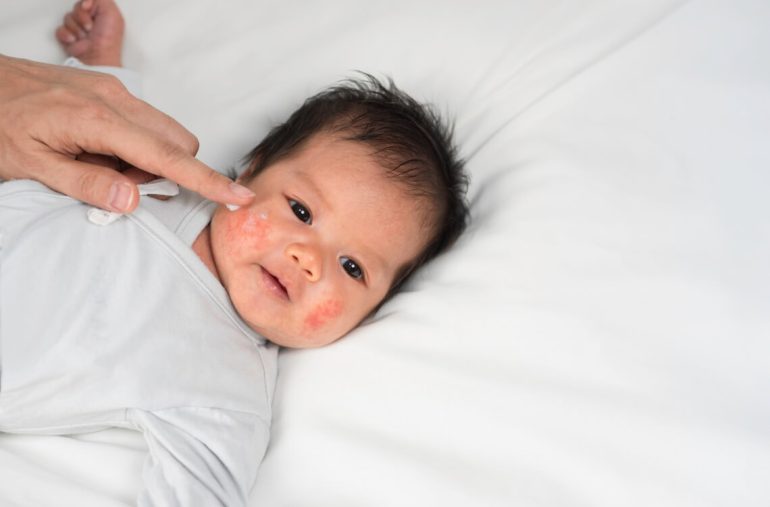
Seeing your little one struggle with itchy, irritated skin can be worrying, especially when the eczema keeps coming back despite trying different skincare products and treatments.
For many parents, childhood eczema also comes with plenty of questions. Should you stop giving your child dairy products? Are steroid creams safe for babies? Will your little one eventually outgrow the condition? And are natural or herbal remedies really better for sensitive skin?
With so much health advice circulating online, it can be difficult to separate reliable medical guidance from common misconceptions.
During a New Mom webinar titled Debunking Myths of Eczema in Children, Dr Mimi Wong, Consultant Paediatrician and Paediatric Dermatologist from Gleneagles Hospital Kuala Lumpur, shared insights into childhood eczema, including its causes, common triggers and treatment approaches. She also addressed several misconceptions that could lead parents to make unnecessary or potentially harmful changes to their child’s care.
Here are eight important things parents should know.
1. Eczema Is More Than Just a Skin Rash
Eczema, also known as atopic dermatitis, is a chronic, relapsing inflammatory skin condition. It is one of the most common childhood skin conditions, affecting up to 20% of children.
It often begins early in life, with up to 60% of cases developing during the first year and 90% appearing before a child turns five.
However, eczema is not simply about having dry, red or itchy patches of skin. It involves a combination of genetic factors, immune system responses, environmental influences and changes in the skin barrier.
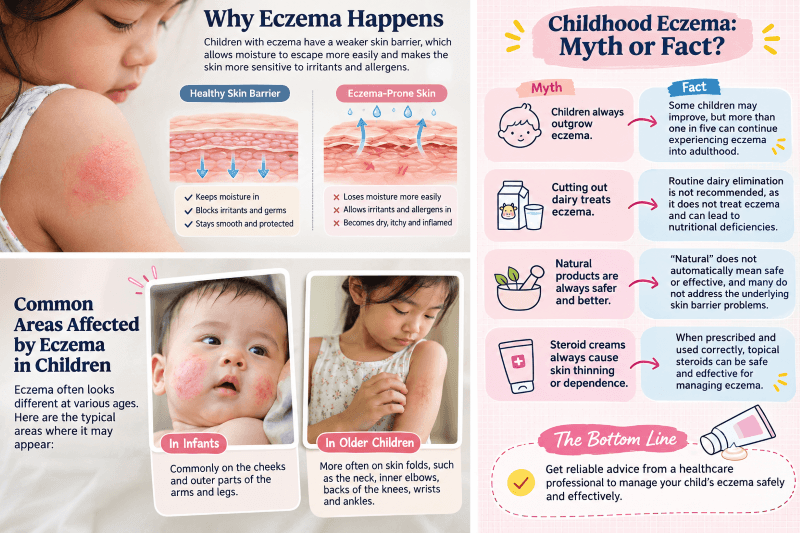
The skin barrier normally helps retain moisture while protecting the body from irritants and other external substances. In children with eczema, this protective barrier is impaired, allowing moisture to escape more easily and making the skin more vulnerable to irritation and inflammation.
The resulting itchiness can be particularly distressing. Severe itching may disrupt a child’s sleep, while repeated scratching can further damage the skin and increase the risk of secondary infections.
Eczema can also affect a child’s emotional wellbeing and daily activities, while placing additional stress on parents and caregivers.
2. Children Do Not Always Outgrow Eczema
Many parents hope their child’s eczema will disappear as they get older. While some children may experience improvement, eczema does not necessarily go away during childhood.
More than one in five affected children may continue experiencing the condition into adulthood.
According to Dr Wong’s presentation, persistence is more likely among children who develop eczema before the age of two, have more severe disease during the early years or have a family history of atopic conditions such as asthma and allergic rhinitis.
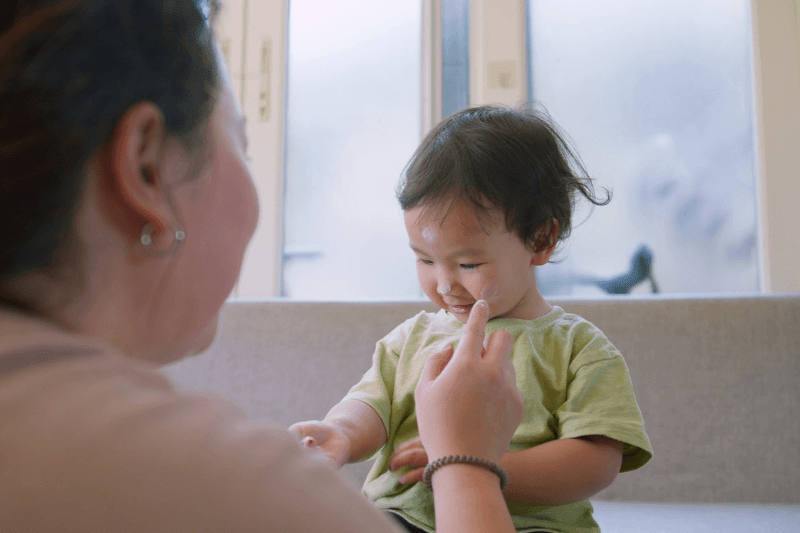
The location of eczema can also change as children grow.
In infants, eczema commonly appears on the cheeks and outer surfaces of the arms and legs. As children get older, it may become more noticeable around skin folds, including the neck, inner elbows and backs of the knees, as well as the wrists and ankles.
Understanding that eczema is a recurring condition can help parents set realistic expectations and maintain a consistent treatment routine, even when their child’s skin appears to have improved.
3. Eczema Is Not Caused by Just One Trigger
It is easy to assume that a particular food, skincare product or environmental factor is responsible whenever a child’s eczema flares up.
However, eczema is a multifactorial condition. It develops through the interaction of genetic susceptibility, immune system dysregulation, impaired skin-barrier function, environmental influences and the skin microbiome.
Various factors may trigger or worsen flare-ups in susceptible children. These include heat, sweating, pollution, drooling, viral infections, immunisations and emotional stress.
This also explains why avoiding one particular trigger may not be enough to control the condition.
Dr Wong cautioned parents against believing products that promise to cure eczema by targeting just one underlying issue.
“If let’s say somebody wants to sell you one product that can target this one thing only that can actually cure your eczema, don’t believe it because that’s not as simple as that. You have so many things to target in order to get control of this eczema.”
Instead of relying on a single product or supposed miracle cure, eczema management requires a combination of appropriate treatments and consistent skincare.
4. Cutting Out Cow’s Milk Does Not Automatically Treat Eczema
Food allergies and eczema are not the same condition, although they can sometimes occur together.
Children with eczema may show signs of food sensitisation, but this does not automatically mean that a particular food is responsible for their skin condition.
One common misconception is that parents should eliminate cow’s milk or other dairy products to improve their child’s eczema.
Dr Wong advised against routinely removing cow’s milk from a child’s diet as a way to manage eczema.
“Please do not restrict or stop taking cow’s milk as a routine or way to treat eczema, because this is not helpful and may bring harm to the child.”
Unnecessary dietary restrictions can have serious consequences, particularly for young children who need adequate nutrition to support their growth and development.
Removing important food groups without proper medical guidance may lead to nutritional deficiencies, weight loss and even growth failure.
If a genuine food allergy is suspected, parents should seek medical assessment rather than independently eliminating foods from their child’s diet.
5. Routine Allergy Blood Tests May Not Provide the Answers Parents Expect
Parents sometimes turn to broad allergy blood tests, including specific IgE or RAST testing, hoping to identify what is causing their child’s eczema.
However, a positive test result does not necessarily mean that the child has a clinical allergy.
These tests can detect sensitisation, which means the immune system recognises a particular substance, but this does not always translate into an actual allergic reaction.
Without considering the child’s medical history and symptoms, test results may be misleading. False-positive results can also lead to unnecessary dietary restrictions.
For children with eczema alone, routine broad-spectrum allergy testing is not recommended.
A proper clinical assessment is important to determine whether further allergy investigations are necessary and whether any dietary changes are appropriate.
6. Natural and Herbal Products Are Not Necessarily Better for Eczema
When a child has sensitive skin, parents may prefer products labelled natural, organic or herbal, believing these are gentler alternatives to conventional treatments.
However, natural does not automatically mean safe or effective.
According to the webinar discussion, there is limited robust evidence supporting many natural and herbal remedies for eczema. Some products may also fail to address the underlying skin-barrier problems.
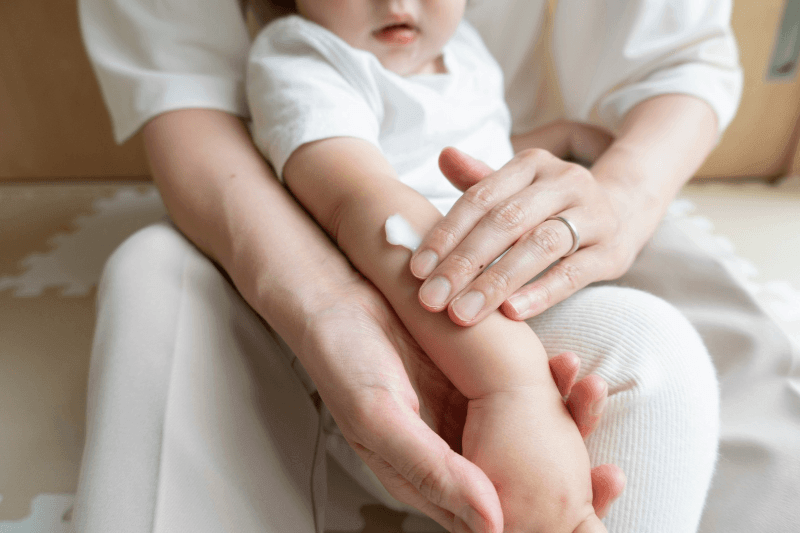
Moisturisers, also known as emollients, remain an important part of eczema care because they help replenish moisture and support the skin barrier.
Some formulations contain skin-identical or physiological lipids, including ceramides, cholesterol and fatty acids, which help support the skin’s protective function.
Rather than choosing products based solely on marketing claims, parents should discuss suitable skincare options with their child’s healthcare professional.
7. Steroid Creams Do Not Automatically Cause Dependence or Skin Thinning
Topical corticosteroids are an important part of eczema treatment, but they are also among the treatments parents may feel most hesitant about using.
Concerns about skin thinning, dependence and topical steroid withdrawal can sometimes cause caregivers to underuse prescribed treatments.
Dr Wong explained that topical corticosteroids remain a foundational treatment for controlling eczema when used appropriately.
The correct strength depends on factors such as the affected area and severity of the condition. For sensitive areas such as the face and neck, a suitable low-potency preparation may be prescribed under clinical supervision.
Steroid creams should be applied to affected areas as directed, rather than unnecessarily applied to normal, unaffected skin.
It is also important to understand that eczema is a chronic and recurring condition. When symptoms return after treatment is stopped, this does not automatically mean that the child has become dependent on the medication.
Instead, the underlying condition may simply be experiencing another flare-up.
Dr Wong also highlighted the importance of completing treatment until the affected skin has returned to a normal, smooth texture, followed by an appropriate step-down or maintenance plan.
Parents should consult their child’s doctor if eczema continues to flare despite treatment, as the application method, treatment strength, possible infection or other contributing factors may need to be reassessed.
8. Antihistamines Alone Cannot Control Eczema
When children experience intense itching, parents may consider antihistamines to help relieve their discomfort.
However, antihistamines are not recommended as a standalone treatment for eczema because they do not address the underlying skin inflammation and barrier dysfunction.
Sedating antihistamines may sometimes be considered for short-term use at bedtime during an acute flare to help with sleep, but they should not replace standard eczema treatment.
Parents should consult their child’s doctor before giving antihistamines, particularly to babies and young children.
Helping Your Child Live More Comfortably with Eczema

Although childhood eczema can be challenging to manage, a consistent care routine can help children experience better symptom control and fewer disruptions to their daily lives.
Dr Wong’s discussion highlighted several practical measures that can complement medical treatment:
- Moisturise regularly: Emollients help replenish moisture and support the skin barrier.
- Keep fingernails short: Trim your child’s nails regularly to reduce skin damage from scratching.
- Use appropriate cooling methods: Cooling measures, including thermal water sprays, may help ease discomfort.
- Consider wet wraps: Wet wrap therapy can help with hydration and inflammation, but should be used appropriately, particularly in hot weather.
- Reduce scratching: Protective clothing and age-appropriate distractions can help discourage repeated scratching.
- Follow the treatment plan: Use prescribed treatments as directed and maintain an appropriate skincare routine even when symptoms improve.
Ultimately, parents should remember that eczema management is about long-term control rather than finding a permanent cure through one product or treatment.
As Dr Wong emphasised, understanding the recurring nature of eczema, using appropriate treatments and seeking reliable medical advice can help parents make more informed decisions about their child’s skin health.
If your little one has persistent or worsening eczema, speak to a healthcare professional about an appropriate assessment and treatment plan.
Keep up with Motherhood Malaysia between articles. Follow our WhatsApp Channel and Facebook Channel for updates and more parenting content!
Disclaimer: The information provided in this article is for informational purposes only and should not be considered as medical advice from Motherhood. For any health-related concerns, it is advisable to consult with a qualified healthcare professional or medical practitioner.
For more insightful stories and fun recipes, stay tuned to Motherhood Story!
