



Going back to work after having a baby can bring mixed feelings. You may be looking forward to getting back into your routine, but at the same time, you might be wondering how you will manage pumping breaks, milk storage and your baby’s feeding schedule once you’re no longer together throughout the day.
For mothers who wish to continue breastfeeding, returning to work does not necessarily mean the end of their breastfeeding journey. With some preparation and a workable routine, it is possible to continue providing breast milk while balancing work and family responsibilities.
During a New Mom Webinar Series session held in collaboration with Gleneagles Hospital Kuala Lumpur, Lactation Educator Ms Elpeni Ramli shared practical advice on preparing for breastfeeding, introducing bottles, expressing and storing breast milk, and maintaining milk supply after returning to work.
Her key message was that preparation should begin before delivery, rather than waiting until maternity leave is almost over.
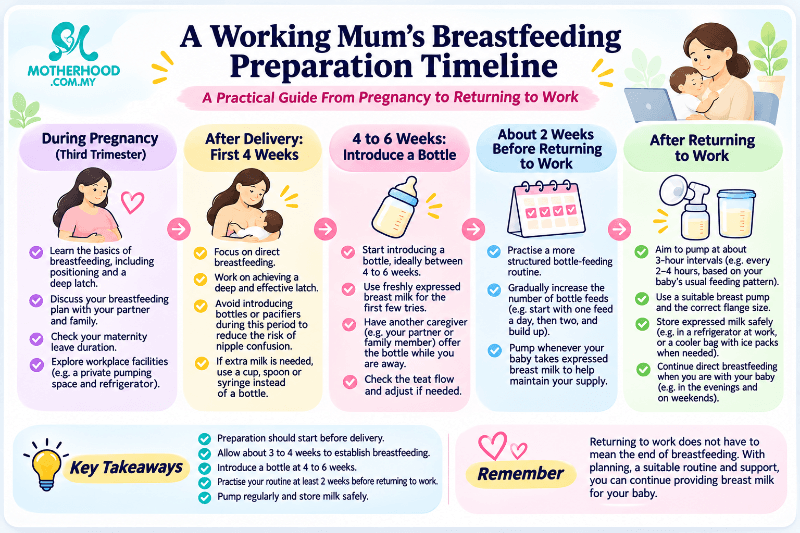
1. Start Preparing for Breastfeeding During Pregnancy
If you intend to continue breastfeeding after returning to work, Ms Elpeni recommended starting your preparations during the third trimester.
Breastfeeding may be natural, but that does not mean every mother and baby will immediately find it easy. Understanding the basics, including how to position your baby and achieve a deep latch, can help you feel more prepared when your little one arrives.
It is also important to involve your partner and close family members in your plans. Discuss your breastfeeding goals with the people who will be supporting you, so they understand why newborns may feed frequently and why you may want to continue breastfeeding exclusively for the first six months.
A little preparation beforehand can make a difference, especially during those early days when you are recovering from delivery, adjusting to motherhood and getting used to your baby’s feeding needs.
Ms Elpeni also encouraged mothers to think ahead about their return to work. Find out how long your maternity leave will be, whether your workplace has a private space for expressing milk, and whether there is a refrigerator available for storing expressed breast milk.
These practical arrangements can make the transition less stressful later on.
2. Establish Direct Breastfeeding Before Introducing Bottles
The first few weeks after delivery are an important period for both mother and baby to learn how to breastfeed.
Ms Elpeni recommended focusing on direct breastfeeding and achieving an effective latch during this early stage. She explained that breastfeeding may take approximately three to four weeks to become established, so mothers should give themselves and their babies time to adjust.
She advised delaying bottle and pacifier introduction during the first four weeks, as introducing them too early may affect how some babies latch or respond to the breast.
If a baby needs additional expressed milk during this early period, she suggested alternative feeding methods such as a cup, spoon or syringe, depending on the baby’s needs and circumstances.
However, delaying bottles does not mean that breastfed babies cannot learn to accept them later.
3. Introduce a Bottle Before Returning to Work

According to Ms Elpeni, four to six weeks after delivery is a suitable window to start introducing a bottle.
For the first attempt, she suggested using freshly expressed breast milk. Another family member or caregiver should offer the bottle while the mother steps away. This may help because some babies can become reluctant to take a bottle when they can smell their mother’s milk nearby.
If you are planning to return to work, she also recommended starting a more structured bottle-feeding routine at least two weeks before your first day back.
Rather than making a sudden switch, gradually introduce bottle feeds so your baby and caregiver have time to adjust.

One example she shared was:
- Days 1 to 3: Introduce one bottle feed a day.
- Days 4 to 6: Increase to two bottle feeds a day.
- Following days: Gradually increase the number of bottle feeds to match the expected workday routine.
- Before returning to work: Practise the planned feeding arrangement so you can estimate how much expressed milk your baby may need.
An important part of this process is to pump whenever your baby receives expressed breast milk. This helps replace the milk removal that would otherwise happen through direct breastfeeding.
4. Build a Pumping Routine That Works Around Your Job
Once you return to work, regular milk expression is important if you want to maintain your supply.
Ms Elpeni suggested that mothers who are away from their babies aim to pump at approximately three-hour intervals, using their baby’s usual feeding pattern as a guide. For example, if the baby normally feeds every two and a half hours, the mother can adjust her pumping routine accordingly.
She also explained that pumping frequency matters more than simply having one long pumping session. Regular milk removal helps stimulate continued production, while consistently leaving long gaps between sessions may affect supply over time.

Of course, work schedules are not always predictable. Meetings and urgent tasks may sometimes get in the way, so she suggested allowing some flexibility. Depending on the circumstances, pumping every two to four hours may be manageable.
A double electric breast pump may also be helpful for working mothers, as it allows both breasts to be expressed at the same time and can save time during breaks.
Other practical tips include:
- Check your flange size: An unsuitable flange can make pumping uncomfortable and affect milk expression.
- Check your pump parts: Worn valves and membranes may affect suction. Follow the manufacturer’s instructions on when to replace them.
- Prepare your equipment: Make sure all pump parts, storage bags and other supplies are ready before leaving home.
- Set reminders: Use alarms to help you keep track of pumping breaks, particularly on busy workdays.
5. Prepare a Safe Milk Storage System At Work
Having a reliable system for handling expressed breast milk can make your working day much easier.
Ms Elpeni recommended preparing the necessary supplies in advance, including milk storage bags or bottles, a cooler bag, ice packs and a pen to label the expressed milk with the pumping time.
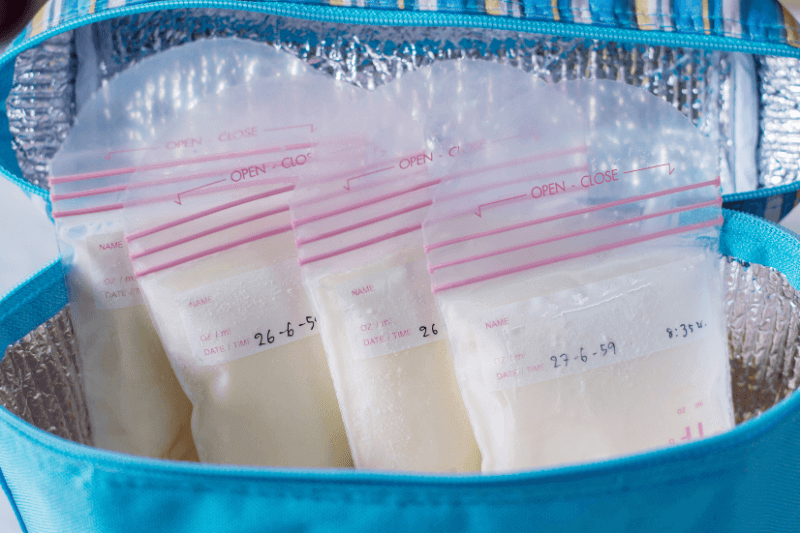
If your workplace has a refrigerator, expressed milk can be kept chilled during the day. The ice packs can be placed in the freezer before being used in your cooler bag for the journey home.
She also encouraged mothers to prepare their equipment the night before. Clean and sterilise the pump parts as required, check that all components are present, and make sure you have enough storage supplies for the following day.
Partners can play a useful role here, too. They can help wash pump parts, prepare equipment and organise stored milk, allowing mothers to focus on feeding their babies when they are home.
6. Worried About Your Milk Supply? Don’t Rely On Pumping Output Alone
One common concern among breastfeeding mothers is whether they are producing enough milk, particularly when they start expressing regularly.
Ms Elpeni explained that pumping output can vary. For a mother whose baby is still breastfeeding directly, expressing around 0.5 to 2 ounces from both breasts combined may be normal in some circumstances.
A smaller pumping yield does not automatically mean that you have low milk supply.
Before assuming that you are not producing enough milk, she advised checking whether your pumping technique is effective, whether the flange fits properly and whether the pump is suitable for your needs.
She also highlighted the impact of stress and worry. Returning to work can be demanding, and changes to your routine may temporarily affect breastfeeding. Rather than focusing only on milk-boosting foods or products, mothers should also consider their overall wellbeing and seek support when needed.
When your baby is with you, Ms Elpeni encouraged direct breastfeeding where possible, including during evenings and weekends.
7. How to Tell If Your Baby Is Getting Enough Breast Milk
It is easy to become preoccupied with how much milk you can pump, but Ms Elpeni reminded mothers that pumping volume alone is not a reliable way to assess whether a baby is getting enough milk.
Instead, she highlighted the importance of observing the baby’s feeding behaviour, urine output and weight.
Some of the indicators she discussed included:
- Wet nappies: From day five onwards, she highlighted at least six urine outputs a day as a useful indicator. The urine should generally be pale yellow rather than concentrated.
- Active feeding: Listen for sucking and swallowing during breastfeeding.
- Stool changes: Newborn stools typically change from dark meconium to lighter green and eventually yellow as feeding progresses.
- Weight: Babies may lose some weight during the first few days after birth but should generally regain their birth weight by around two weeks.
These are general indicators rather than a substitute for an individual feeding assessment. If you are concerned about your baby’s intake, weight gain, wet nappies or feeding behaviour, speak to your baby’s healthcare professional or a qualified lactation professional.
8. What If Your Baby Suddenly Refuses the Bottle?
Some babies accept bottles initially but begin refusing them later, which can be particularly stressful when a mother’s return-to-work date is approaching.
For mothers experiencing this, Ms Elpeni suggested approaching bottle introduction again as they did the first time. Try offering freshly expressed milk and having another caregiver feed the baby while the mother steps away.
She also suggested checking the teat flow. Rather than buying several different bottles, mothers can try changing the teat to see whether a slower or faster flow makes feeding more comfortable for the baby.
If bottle refusal continues, seeking individual guidance from a lactation professional can help identify what may be happening.
Breastfeeding and Working Can Coexist with the Right Preparation
Returning to work while continuing to breastfeed may take some planning, patience and adjustments along the way. There may be days when pumping breaks are difficult to fit into your schedule, your baby takes less milk than expected, or you find yourself worrying about your supply.
The important thing is to establish a routine that works for both you and your baby, rather than expecting everything to go perfectly from the beginning.
As Ms Elpeni shared during the webinar, mothers can begin preparing during pregnancy, establish direct breastfeeding after delivery, gradually introduce bottles and practise their pumping routine before returning to work.
And remember, you do not have to figure everything out on your own. If you are facing difficulties with latching, milk supply, pumping or bottle feeding, seek support from a qualified lactation professional who can guide you according to your individual needs.
Source: Ms Elpeni Ramli, Lactation Educator from Gleneagles Hospital Kuala Lumpur
Get Ready for Your Little One’s Arrival!
Preparing to become a parent? Join our Parentcraft Class Workshops to learn essential knowledge and practical skills for childbirth, newborn care and your journey into parenthood.

Register for Parentcraft Class Workshops → https://www.motherhood.com.my/event/parentcraft-class
Parenting Knowledge, Guidance and Support – Just for You!
Whether you’re expecting a baby or adjusting to life as a new parent, join our New Mom Webinar Series to learn from healthcare professionals and experienced experts. Explore topics covering pregnancy, breastfeeding, newborn care, child health and more.

Explore Upcoming New Mom Webinars → https://www.motherhood.com.my/event/newmom-webinar
Stay Connected with Motherhood!
Get helpful parenting tips, expert advice, pregnancy updates, family news and more, delivered straight to your WhatsApp.

Join our community and stay informed throughout your parenting journey → Follow Our WhatsApp Channel and Facebook Channel now!
Disclaimer: The information provided in this article is for informational purposes only and should not be considered as medical advice from Motherhood. For any health-related concerns, it is advisable to consult with a qualified healthcare professional or medical practitioner.
For more insightful stories and fun recipes, stay tuned to Motherhood Story!
