Education is one of the few things that quietly shapes almost every stage of family life.
From the moment we start looking at preschools to the years spent worrying about exams, pathways, and future opportunities, the education system sits at the centre of how parents plan, hope, and prepare.
Over the past year, Malaysia’s education landscape has seen some of its most significant proposed changes in decades.
Through a series of announcements and policy directions, Prime Minister Anwar Ibrahim has outlined a long-term vision that aims to reshape how children learn, how students are assessed, and how accessible education is for families across the country.
Here is a clear breakdown of the key education updates parents should understand.
A New Long-Term Blueprint: National Education Plan 2026-2035
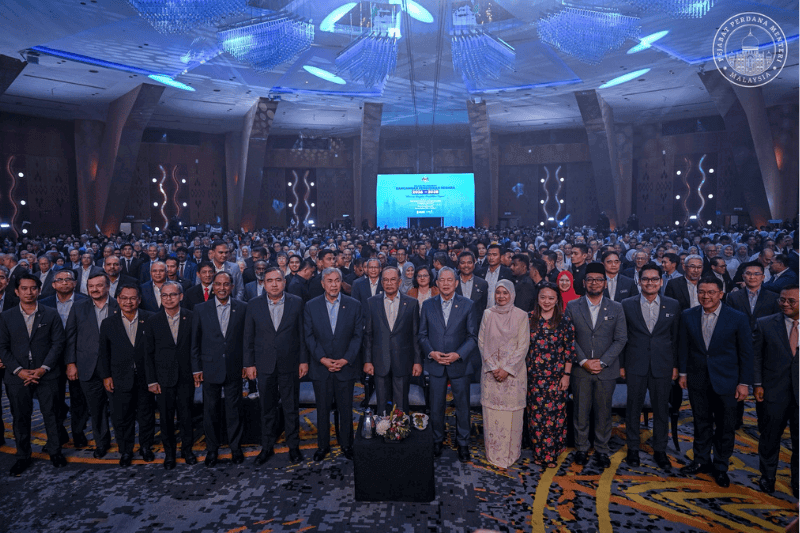
At the heart of the reforms is the National Education Plan 2026-2035, a ten-year roadmap that will guide changes across early childhood education, schools, and higher learning institutions.
The plan is positioned as more than a curriculum update, where focus is placed on strengthening the entire education ecosystem, with emphasis on inclusivity, relevance, and long-term sustainability.
Rather than prioritising examination results alone, the direction signals a shift towards developing well-rounded students equipped with critical thinking skills, values, and adaptability in a fast-changing world.
Changes to School Entry Ages
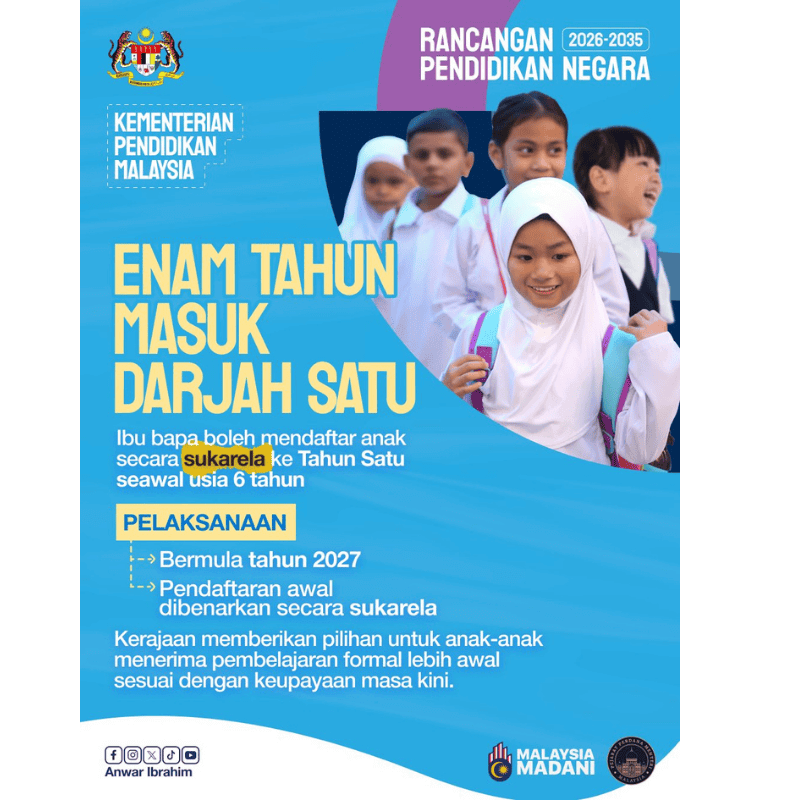
One of the most discussed announcements affects how early children formally enter the school system.
Under the proposed changes, preschool will begin at age five and Year One at age six.
Importantly, this is not a mandatory requirement.
The flexibility allows parents to decide based on their child’s readiness, recognising that children develop at different paces.
Bahasa Melayu and Sejarah Under the National Curriculum

While greater flexibility is being introduced around school entry age, the government has clarified that core subjects such as Bahasa Melayu and Sejarah will continue to follow the national (Kebangsaan) curriculum.
This means learning outcomes, content standards, and national benchmarks for these subjects remain consistent across the education system.
The intention is to ensure that all students share a common foundation in language proficiency and historical understanding.
A Shift in Student Assessment
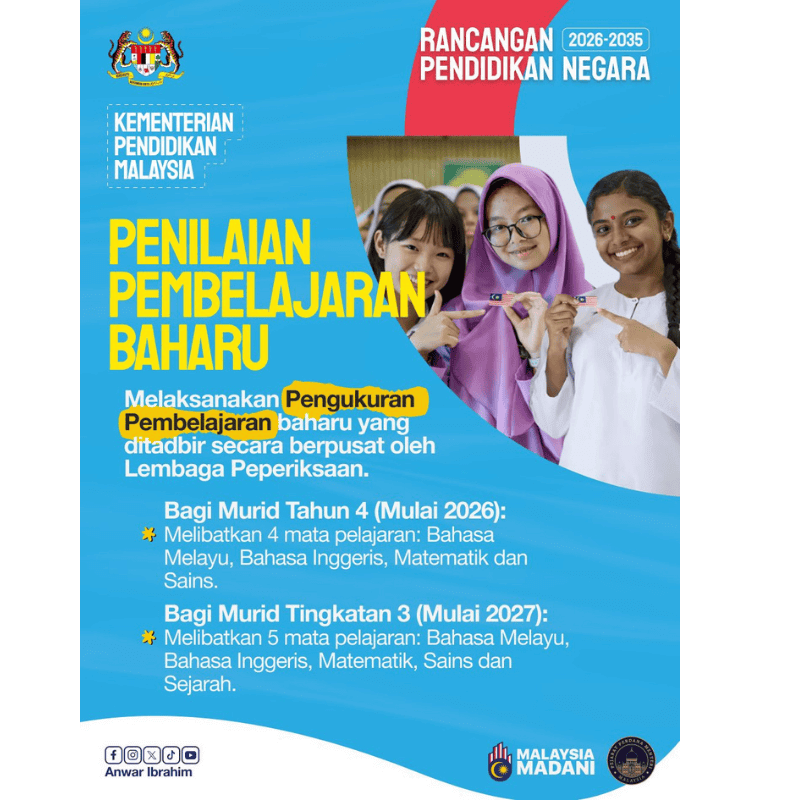
Assessment is another area undergoing reform.
The government has signalled changes to how students from upper primary to lower secondary levels are evaluated, with plans to introduce more comprehensive learning-based assessments.
The goal is to move away from an over-reliance on high-stakes examinations and towards evaluation methods that reflect progress, understanding, and individual strengths.
This approach aims to reduce unnecessary stress while giving teachers better insight into how students are actually learning.
Reclassifying Pre-University Education
Another notable update involves Form Six and matriculation programmes, which will now be categorised under higher education rather than secondary education.
This structural change recognises pre-university pathways as a distinct stage of academic development and aligns them more closely with tertiary education standards.
The move may open doors to improved recognition, clearer progression routes, and better alignment with universities and colleges.
Expanded Access and Financial Support
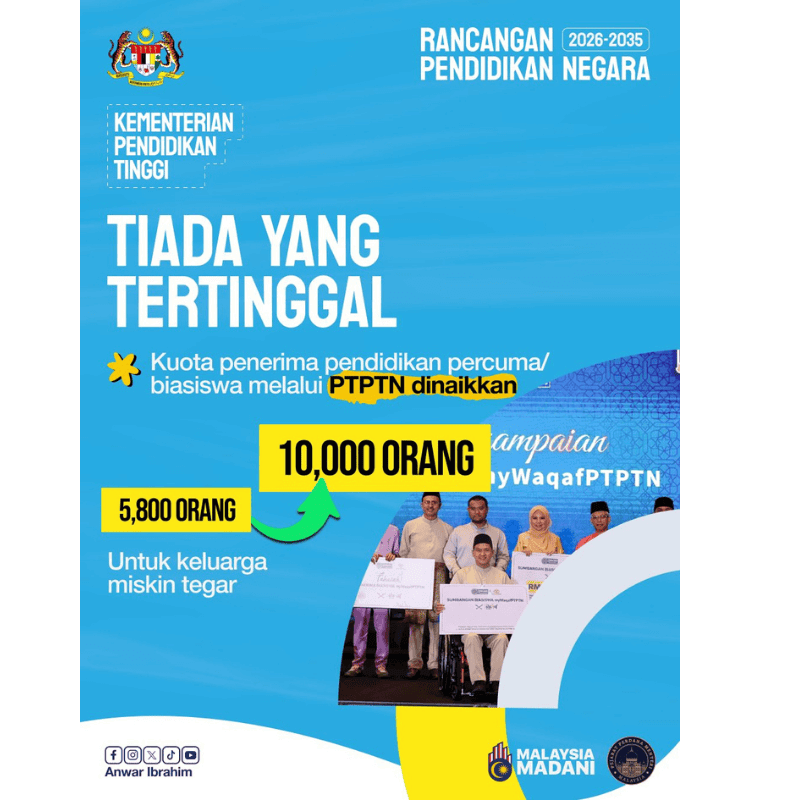
Affordability remains a major concern for many families, and the reforms include measures aimed at easing financial barriers.
Among the key initiatives announced:
-
Free access to higher education at public institutions for students from low-income households and those with disabilities.
-
Increased funding allocations to various school systems, including vernacular and religious schools.
-
Continued education-related assistance aimed at reducing the cost burden on parents.
These measures reinforce the message that education should not be limited by background or financial circumstance.
Strengthening Technical and Skills-Based Education
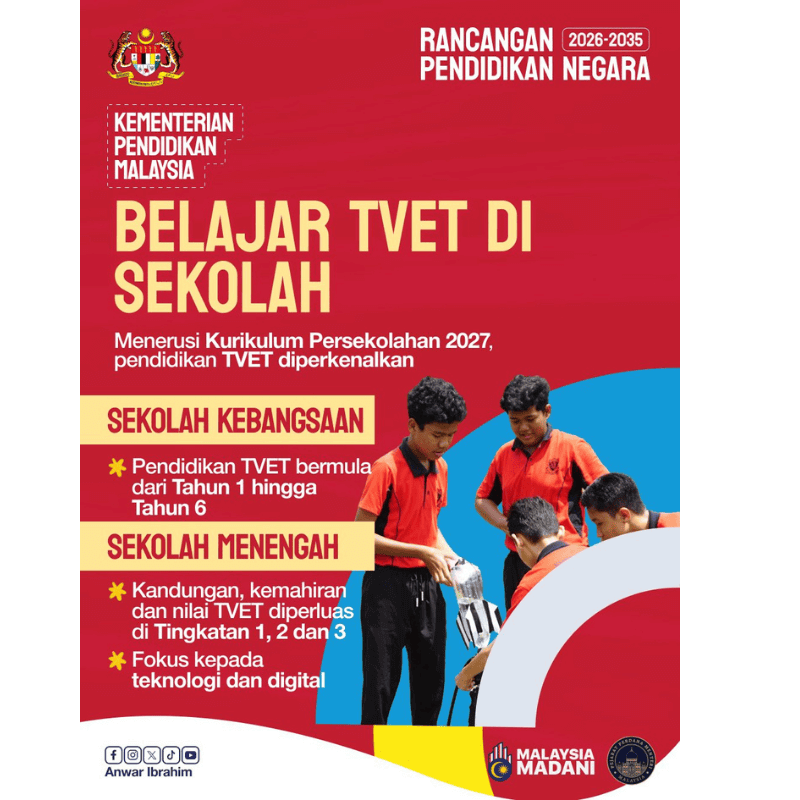
Beyond traditional academic pathways, the government has also highlighted the importance of technical, vocational, and skills-based education.
Plans include upgrading selected polytechnics and strengthening technical institutions to better meet industry needs.
This reflects a broader recognition that success after school does not follow a single route and that practical skills and applied learning play a crucial role in employability.
A Broader Vision for Learning
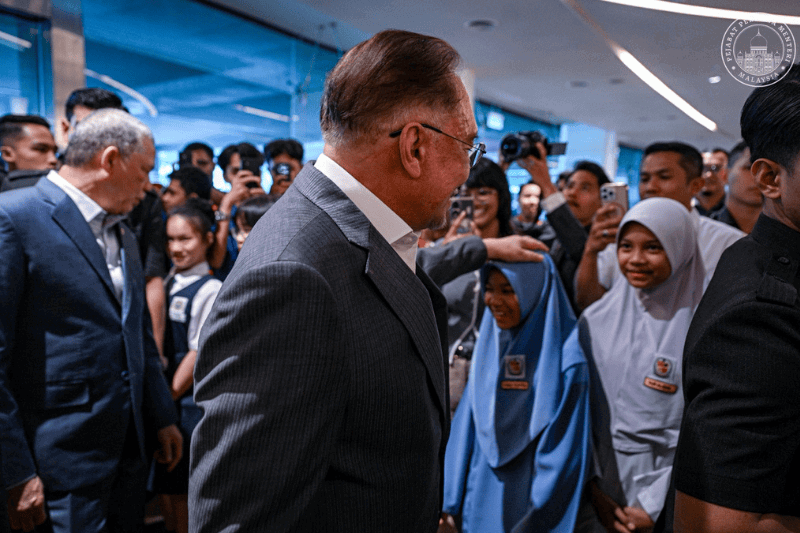
Across multiple speeches and engagements, the prime minister has consistently emphasised the need for an education system that encourages thinking, discussion, and moral development.
Rather than producing students who memorise content, the vision is to nurture learners who can question, reason, and contribute thoughtfully to society.
This focus on values, citizenship, and humanity reflects growing public concern about pressure, burnout, and the narrow definition of academic success.
Taken together, these education reforms suggest a long-term shift rather than quick fixes.
While implementation will take time, this direction aims to create a system that aims to be more inclusive, less exam-driven, and better aligned with real-world demands.
For parents, these changes may influence when children start school, how progress is measured, what pathways are valued, and how accessible education remains as children grow older.
Note: All images in this article were sourced from Prime Minister Anwar Ibrahim’s Facebook.
Follow Motherhood.com.my for more updates.
Disclaimer: The information provided in this article is for informational purposes only and should not be considered as medical advice from Motherhood. For any health-related concerns, it is advisable to consult with a qualified healthcare professional or medical practitioner.
For more insightful stories and fun recipes, stay tuned to Motherhood Story!